

Key Takeaways
Why Packing Myths Stick Around
Packing advice travels fast — shared in travel forums, repeated by frequent flyers, and passed down from well-meaning friends. The problem is that a lot of it gets repeated without anyone checking whether it actually holds up. Some myths sound logical. Others feel like insider knowledge. But when you test them against real airline policies, baggage physics, or security screening reality, many fall apart.
This matters because bad packing habits cost real money and real time. Oversized carry-ons get gate-checked. Vacuum-compressed bags tip the scale past the weight limit. Half-packed toiletry kits get flagged at TSA. See our guide to packing light for a deeper look at what drives these habits — but first, let's clear out the myths.
The Myths, Corrected
The following misconceptions show up repeatedly among travelers of all experience levels. Each one has a grain of plausibility — which is exactly why they persist.
Myth
Vacuum compression bags let you pack twice as much without any downside.
Fact
Compression bags reduce volume but not weight — and airlines charge by weight, not bulk.
Vacuum bags work by removing air, which shrinks bulky items like sweaters and down jackets. But the clothes inside weigh exactly the same as before. If your compressed bag pushes your checked luggage past the airline's weight limit, you'll pay overage fees that likely cost more than the bag itself saved you. Compression is genuinely useful for reducing the physical size of a carry-on or keeping soft items organized, but it's not a workaround for weight restrictions.
Myth
Rolling your clothes always saves more space than folding.
Fact
Rolling helps with some fabrics and packing styles, but it isn't universally superior to folding.
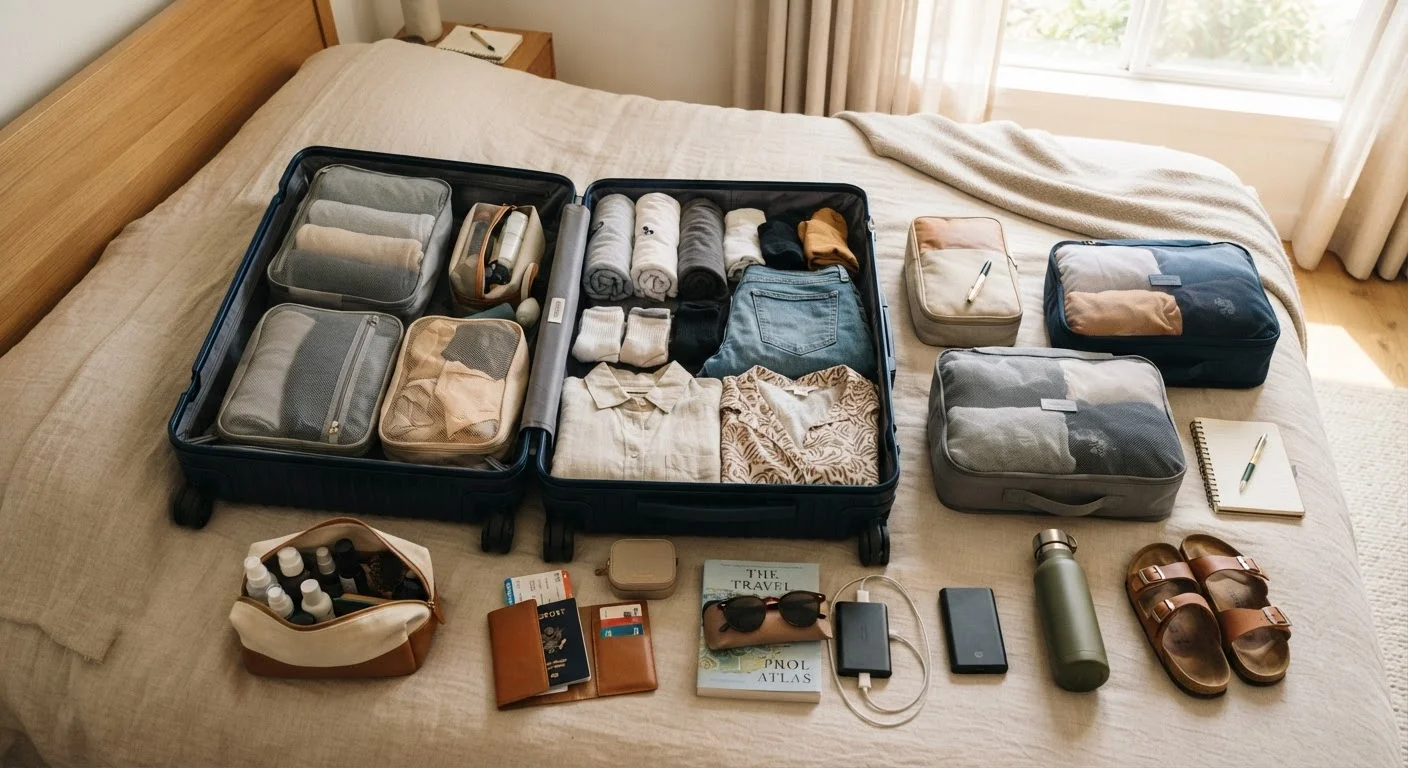
The roll-vs-fold debate has real nuance. Rolling works well for knits, t-shirts, and casual fabrics that won't crease badly. But structured items — blazers, dress shirts, trousers with a sharp crease — are often better folded or laid flat to avoid distortion. A hybrid approach tends to work best: roll casual layers, fold structured clothing, and use packing cubes to keep both organized. The rolling vs. folding research breakdown goes deeper on what frequent travelers and packing experts have actually found.
Myth
Packing cubes let you fit more into a suitcase.
Fact
Packing cubes improve organization but don't meaningfully increase how much a bag holds.
Packing cubes are excellent organizational tools. They keep clothing categories separated, make unpacking fast, and help you find things without digging. What they don't do is compress your clothes or add capacity to a fixed-volume bag — in some cases, the cube structure itself takes up marginal space. The honest breakdown of packing cubes explains who benefits most and what to realistically expect.
Myth
You should always pack toiletries to avoid overpriced hotel options.
Fact
Buying basic toiletries at your destination is often cheaper and simpler than flying with them.
Packing a full toiletry kit adds weight and triggers TSA's 3-1-1 liquid rule for carry-on travelers. Many destinations — including most U.S. cities and international tourist areas — have pharmacies and grocery stores where travel-size or full-size toiletries cost less than airport prices and often less than you'd spend in checked baggage fees. For trips longer than a week especially, buying shampoo, sunscreen, or toothpaste locally and leaving it behind is usually more practical than hauling it both ways.
Myth
A detailed packing list means you won't forget anything.
Fact
Lists reduce omissions, but only if reviewed at the right time — not just written and filed.
A packing list is only as good as your habit of actually checking it before you zip up. Many travelers write thorough lists, then pack from memory and glance at the list after. The more reliable approach is to use the list as a physical checklist — items checked off only after they're in the bag. A secondary check the morning of departure catches items left out to use at the last minute (charger, medications, passport). The list is a system, not a talisman.
Myth
Heavier items should always go at the bottom of your bag.
Fact
The correct placement depends on whether the bag is being carried, rolled, or stored overhead.
For rolling suitcases, heavier items near the wheels (the base when upright) helps stability. But for overhead bin placement, a bag lying on its back means the "bottom" is now the side facing the bin floor — so weight distribution shifts. For backpacks and personal items you carry on your body, heavier items should sit closest to your back and high in the pack to keep your center of gravity stable and reduce shoulder strain. There's no single answer — it depends on how the bag travels.
For anyone heading abroad for the first time, some of these myths take on extra weight. The international packing fundamentals guide covers what actually changes when you're crossing borders, beyond just fitting more into a bag.
What Smart Packing Actually Looks Like
Stripping away the myths leaves a clearer picture. Pack for weight first, then volume. Verify carry-on dimensions against the specific airline you're flying — not a general standard. Know your TSA rules before you reach the checkpoint; the TSA liquids and carry-on guide covers the specifics in plain language. And before you zip up, consider whether overpacking is carrying hidden costs you haven't calculated yet — checked bag fees, slower airport navigation, and physical strain add up. The hidden costs of overpacking breakdown runs through how to audit your bag before it's too late.
Packing smarter isn't about owning the right gear or following a rigid system. It's about knowing which rules are real and which ones are just habit dressed up as wisdom.