

Key Takeaways
Keeps clothing categories separated and easy to find
Sorting clothes by type means you can locate a specific item in seconds rather than digging through a loose pile mid-trip.
Bag stays organized throughout the trip
Unlike loose packing, cubed items can be removed and returned without destabilizing the rest of the bag's layout.
Simplifies shared luggage for couples or families
Each person's clothing stays in their own cubes, eliminating the mixing that typically happens in a shared checked bag.
Faster repacking after hotel stays or security
Grab the cubes, drop them back in — no refolding or reorganizing required after a room unpack.
Works well with multi-destination itineraries
Cubes let you pull out only what you need at each stop without reorganizing the entire bag every time.
Does not compress clothes or create extra space
Packing cubes contain and organize volume — they don't reduce it. Overpacking with cubes still results in an overweight or overfull bag.
Cube walls can waste corner and edge space
Rigid cube edges leave gaps in oddly shaped suitcases or bags, space that loose packing would naturally fill.
Wrong sizes create more problems than they solve
Cubes that are too large won't stack efficiently; cubes too small multiply the number of containers you're managing.
Adds minor weight to the base bag load
A full cube set typically adds two to six ounces — negligible for most travelers, but a consideration for strict carry-on weight limits.
Less useful for simple or short trips
A weekend trip in a small bag rarely benefits from a zoned system — the overhead of using cubes can outweigh the organizational payoff.
Our Verdict
Packing cubes deliver real organizational benefits for travelers who move between multiple destinations, share luggage, or need to locate specific items quickly without unpacking everything. For shorter, simpler trips, the value is more modest — you're adding a system where one may not be needed.
Frequent travelers, multi-city itinerary travelers, and anyone who has ever torn apart a bag hunting for one item mid-trip.
What Packing Cubes Actually Are
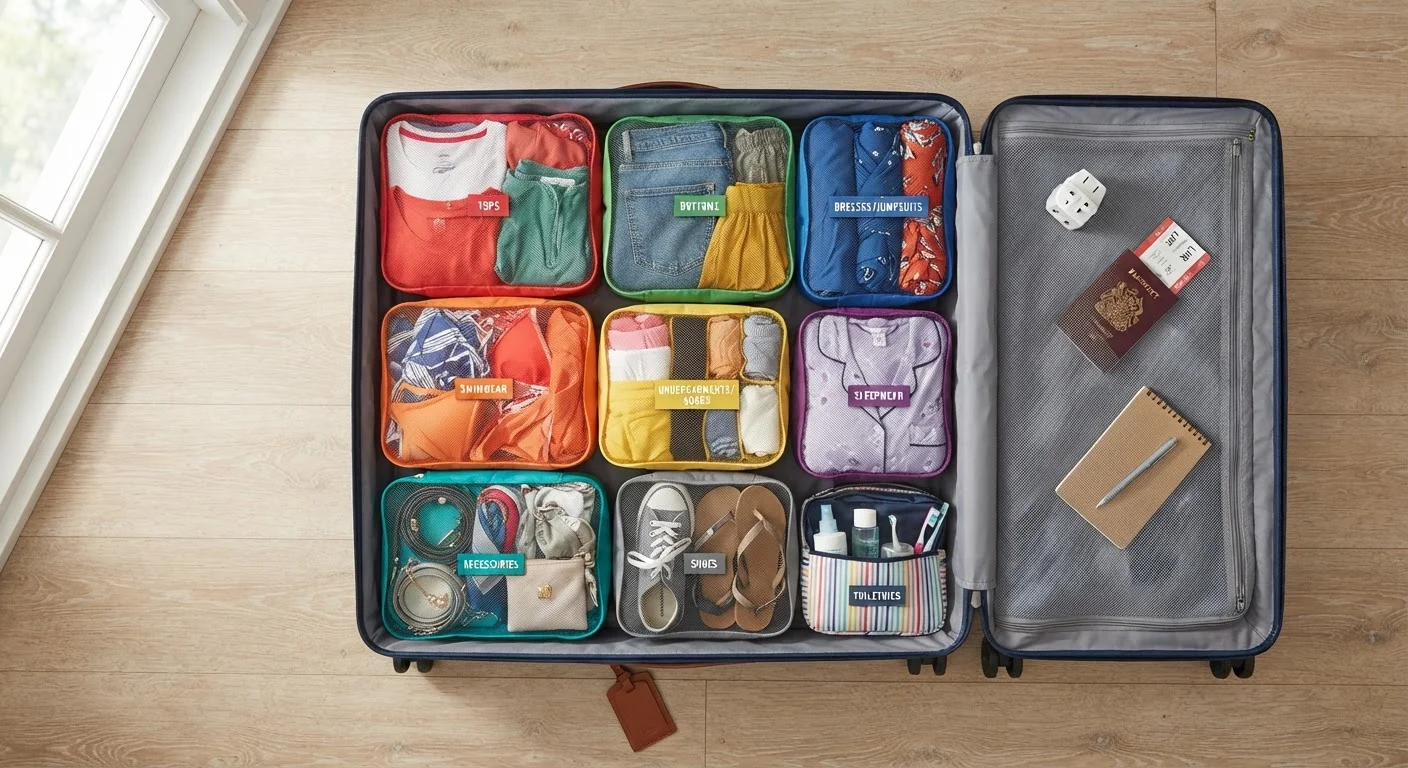
Packing cubes are lightweight fabric containers — typically rectangular, zippered, and sold in sets of varying sizes — designed to fit inside a suitcase or travel bag. The basic idea is simple: instead of layering clothes loosely across a bag, you sort them into cubes by category (tops, bottoms, underwear, gym gear) and slot those cubes into your luggage like building blocks.
Most sets include small, medium, and large sizes. Some cubes have a second compression zipper that flattens the cube slightly once packed. They're made from lightweight nylon or mesh, and a full set typically adds between two and six ounces to your bag's base weight — negligible for checked luggage, worth noting for ultralight carry-on travelers.
What they don't do, despite some marketing language, is create extra space through compression the way vacuum storage bags do. A cube simply relocates volume; it doesn't eliminate it. If your packing habit already runs heavy, cubes will organize the excess — they won't fix it.
The Real Advantages
Keeps clothing categories separated and easy to find
Sorting clothes by type means you can locate a specific item in seconds rather than digging through a loose pile mid-trip.
Bag stays organized throughout the trip
Unlike loose packing, cubed items can be removed and returned without destabilizing the rest of the bag's layout.
Simplifies shared luggage for couples or families
Each person's clothing stays in their own cubes, eliminating the mixing that typically happens in a shared checked bag.
Faster repacking after hotel stays or security
Grab the cubes, drop them back in — no refolding or reorganizing required after a room unpack.
Works well with multi-destination itineraries
Cubes let you pull out only what you need at each stop without reorganizing the entire bag every time.
The strongest case for packing cubes is in-trip usability. When you're moving between three cities in ten days and living out of one bag, being able to pull out a single cube — not excavate the entire suitcase — saves time and keeps things from getting disordered after day two. The same logic applies to shared bags: each traveler's items stay separated without mixing.
There's also a structural benefit. A bag packed with cubes holds its shape better during transit and is easier to repack after security screenings or hotel room unpacking. Loose packing tends to collapse; cubed packing stays organized. For trip-type planning where clothing needs change by destination, cubes let you swap out one zone without dismantling the rest — a strategy covered in more depth in our guide on matching your packing strategy to your trip type.
The Honest Drawbacks
Does not compress clothes or create extra space
Packing cubes contain and organize volume — they don't reduce it. Overpacking with cubes still results in an overweight or overfull bag.
Cube walls can waste corner and edge space
Rigid cube edges leave gaps in oddly shaped suitcases or bags, space that loose packing would naturally fill.
Wrong sizes create more problems than they solve
Cubes that are too large won't stack efficiently; cubes too small multiply the number of containers you're managing.
Adds minor weight to the base bag load
A full cube set typically adds two to six ounces — negligible for most travelers, but a consideration for strict carry-on weight limits.
Less useful for simple or short trips
A weekend trip in a small bag rarely benefits from a zoned system — the overhead of using cubes can outweigh the organizational payoff.
The biggest misconception is that packing cubes make bags smaller or allow you to pack more. They don't — and in some cases, the cube walls themselves waste a small amount of space that loose packing would use more efficiently. Odd-shaped items like shoes, toiletry bags, or bulky outerwear still need to be packed around the cubes, which can create dead space in the corners of a hard-shell suitcase.
There's also a learning curve. Poorly sized cubes create frustration rather than order — too large and they won't fit side by side; too small and you need too many to cover a full trip's clothing. And if you're a roller rather than a folder, some cube dimensions don't accommodate rolled garments cleanly. See how the rolling versus folding debate plays out before committing to a cube system built around one method.
Who Should — and Shouldn't — Bother
Packing cubes are a genuine upgrade for:
- Multi-stop travelers who need to access specific clothing without disrupting the whole bag
- Families or couples sharing a single checked bag
- Business travelers separating work clothes from casual wear
- Anyone flying carry-on only for a longer trip where organization deteriorates over time
They're less useful for:
- A weekend trip in a small duffel where everything is already visible
- Ultralight packers who've already trimmed down to the essentials and want the fewest moving parts
- Travelers who check a large bag and repack only at the start and end of a trip
Cubes Organize — They Don't Downsize
Packing cubes are an organizational tool, not a packing solution. If your core challenge is bringing too much, no cube system will fix that. Before buying cubes, consider whether the real issue is volume — and if so, tackle that first. Once you've right-sized what you're bringing, cubes can help maintain that order throughout the trip.
Before investing in cubes, it's worth auditing whether overpacking — not disorganization — is your actual problem. As our breakdown of the real costs of overpacking shows, volume is often a bigger drag than arrangement. Cubes organize what you bring; they don't decide what stays home.