

Key Takeaways
Option A
Rolling Clothes
The space-conscious packer's go-to technique.
Best for: Travelers packing casual, wrinkle-resistant fabrics into carry-on bags or backpacks.
Option B
Folding Clothes
The structured, wrinkle-minimizing classic.
Best for: Travelers packing dress clothes, structured garments, or filling hard-sided luggage efficiently.
If you're packing mainly casual or synthetic-blend clothing
Rolling Clothes
Rolled casual items compress well and resist travel wrinkles better than you'd expect, freeing up significant bag space.
If your bag includes dress shirts, blazers, or structured garments
Folding Clothes
Flat folding preserves garment shape and reduces the deep creases that rolling tends to create along fabric edges.
If you're packing a backpack or soft-sided carry-on
Rolling Clothes
Rolls fit naturally into irregular spaces and make it easier to see every item without unpacking the whole bag.
If you're packing a hard-sided suitcase for a longer trip
Folding Clothes
Flat layers stack predictably in rigid cases, reducing shifting during transit and keeping items organized by category.
If you want the most space-efficient overall approach
Rolling Clothes
Multiple studies and packing trials suggest rolling consistently achieves higher garment-per-cubic-inch ratios in soft luggage.
Why This Debate Keeps Coming Up
The rolling vs. folding question gets relitigated on every travel forum, and for good reason — both methods have passionate defenders and both produce real results in the right context. The problem is that most advice treats it as a binary choice when the smarter answer is almost always situational.
If you've ever struggled to close an overstuffed bag, you're not alone. Packing light is harder than it looks, and technique is only part of the equation. But technique does matter — and the fabric in your bag matters just as much as the method you use to pack it.
What the Evidence Actually Shows
Formal academic research on clothes-packing techniques is limited, but packing trials conducted by travel writers, luggage manufacturers, and frequent flyer communities have produced reasonably consistent findings:
- Rolling saves space in soft bags. Most trials find that rolling T-shirts, jeans, leggings, and casual knits into cylinders allows more items to fit in the same volume compared to flat folding — particularly in backpacks and duffel-style carry-ons where you're filling irregular space.
- Folding is better for structured garments. Dress shirts, blazers, and trousers tend to crease badly when rolled tightly. Folding these items flat — especially using the bundle-wrapping technique, where garments are layered and wrapped around a soft core — significantly reduces wrinkles.
- Rolling can cause edge creases. The tight cylinder creates a consistent crease line along rolled edges. For cotton dress shirts or linen, this can be harder to shake out than the fold lines from flat packing.
| Criterion | Rolling | Folding |
|---|---|---|
| Space efficiency (soft bags) | Higher — fills irregular space | Moderate — better in rigid cases |
| Wrinkle risk (casual fabrics) | Low | Low to moderate |
| Wrinkle risk (dress clothes) | Higher — edge creases likely | Lower with proper technique |
| Visibility of items | High — rolls stand upright | Lower — stacked layers |
| Best bag type | Backpacks, soft carry-ons | Hard-sided suitcases |
| Speed to pack/unpack | Slightly slower to roll | Faster for most people |
| Works with packing cubes | Yes — rolls fit well | Yes — flat stacking ideal |
One finding that surprises many travelers: the difference in space saved by rolling versus folding is most dramatic in soft-sided luggage. In a rigid hard-shell suitcase with fixed dimensions, the two methods perform more similarly because you're filling a fixed rectangular volume rather than conforming to irregular space.
Fabric Type Is the Real Variable
Before deciding on a method, sort your clothes by material. This single step does more than any packing philosophy:
- Roll these:
- T-shirts, athletic wear, underwear, socks, swimwear, casual knits, fleece, denim, synthetic-blend travel pants
- Fold these:
- Dress shirts, blazers, structured trousers, linen pieces, anything with a collar or defined shape
- Either works:
- Lightweight cardigans, casual button-downs in performance fabrics, mid-layer fleeces
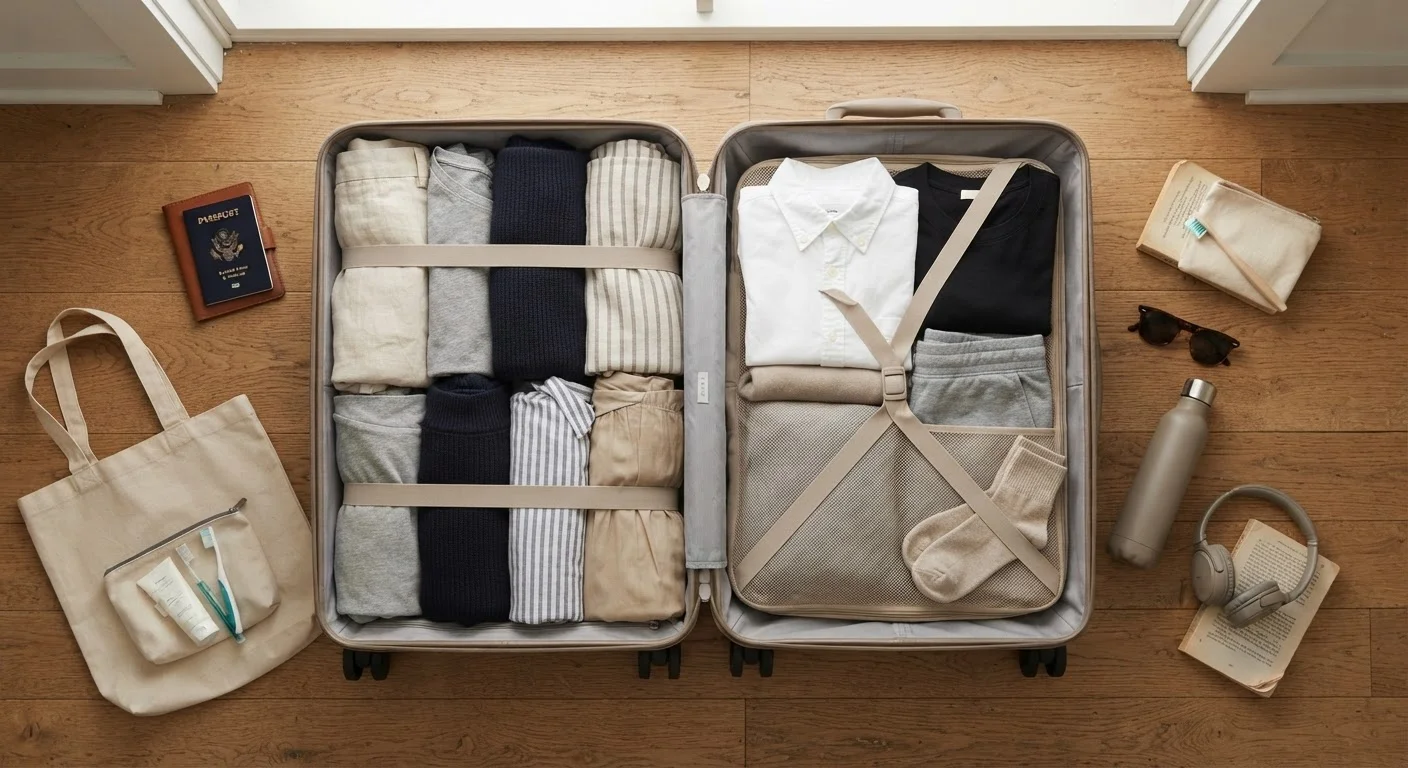
This hybrid approach — rolling casual items and folding structured ones — is what most frequent business and leisure travelers land on after trial and error. It's also the method that pairs best with packing cubes, since you can dedicate one cube to rolled casuals and another to flat-folded dress items.
Practical Tips for Getting the Most from Either Method
For rolling: Roll as tightly as you can without forcing it — loose rolls lose most of the space benefit. Start from the hem and roll toward the collar or waistband. Standing rolls upright in your bag (like files in a drawer) lets you see everything at once without disturbing other items.
For folding: Minimize fold lines by folding along seams where possible. Placing tissue paper or a dry-cleaning bag between layers reduces friction and wrinkle transfer — a trick worth knowing for longer trips with formal wear.
For both: Pack heavier items toward the wheels or base of your bag, regardless of method. This prevents clothes from shifting and compressing during transit. And consider whether splitting items across a shared bag changes which method makes sense for each person's portion.
For a broader look at what packing advice holds up and what doesn't, common packing myths are worth reviewing before your next trip — some widely shared tips actively make the space problem worse.
The Hybrid Method Worth Trying
Many experienced travelers don't commit to one method exclusively — they roll casual items and fold everything structured, dividing the bag by category. This approach tends to produce fewer wrinkles and better space use than either pure method alone. If you're trying it for the first time, pack your bag at home a day early so you can adjust before you're at the airport.