

Key Takeaways
Why Two Weeks in a Carry-On Is Actually Doable
Most people overpack because they pack emotionally — imagining worst-case scenarios instead of actual itineraries. Two weeks sounds like a lot of days, but days repeat. You wear pants more than once. You don't need a different outfit for every dinner.
The real challenge isn't volume — it's decision-making. Done right, a standard carry-on (typically 22" x 14" x 9", though you should always confirm your airline's specific size limit before travel) holds everything most travelers need for 14 days. The method below gives you a repeatable system, not just a packing list. If you're weighing whether a carry-on even makes sense for your trip, see our carry-on vs. checked luggage guide first.
Check Airline Rules Before You Assume
Carry-on size and weight limits differ meaningfully across airlines — and even across fare types on the same airline. A bag that qualifies on one carrier may not on another. Always verify limits directly on the airline's website for every leg of your trip, especially if you're connecting through a different carrier. This single check can prevent a costly gate-check fee or forced repacking at the airport.
Before You Start: What You Need
The steps below assume you've gathered your gear. Here's what to have on hand before you begin.
What you will need
Your destination also shapes your packing strategy significantly. A beach trip and a city break call for completely different base layers and footwear. If you haven't thought through that angle, trip-type packing considerations are worth reviewing before you commit to a clothing system.
Step-by-Step: How to Pack It All In
Follow these steps in order. Skipping ahead — especially before auditing your clothing — is where most packing attempts break down.
Define your trip's real activity mix
Write down your actual planned activities — not everything you might do. Assign rough percentages: 60% casual sightseeing, 20% nicer dinners, 20% active walking. This breakdown determines your clothing categories, not the number of days.
Build a mix-and-match clothing core
Choose a neutral color palette (navy, grey, black, white, tan) and select items that layer and combine. A solid framework for a 14-day trip: 4–5 tops, 2–3 bottoms, 1 lightweight layer or jacket, and 1 versatile dress or smart outfit for evenings. Every piece should work with at least two others. For a deeper system, our article on capsule wardrobes for travel walks through specific outfit pairings.
Plan for at least one laundry opportunity
Identify where you'll do laundry — a hotel sink, a laundromat near your accommodation, or a wash-and-fold service. Even one mid-trip laundry day lets you cut clothing volume by roughly 40–50%. Build this into your packing math before you load the bag, not after.
Handle liquids and toiletries first
TSA's 3-1-1 rule requires all liquids in carry-on bags to be in containers of 3.4 oz (100ml) or less, all fitting in a single quart-sized clear bag. Lay out every liquid item you intend to bring and verify each container size. Consolidate or eliminate anything that doesn't fit the rule. Solid alternatives — shampoo bars, solid sunscreen, toothpaste tablets — sidestep the limit entirely.
Roll clothes and load by weight zone
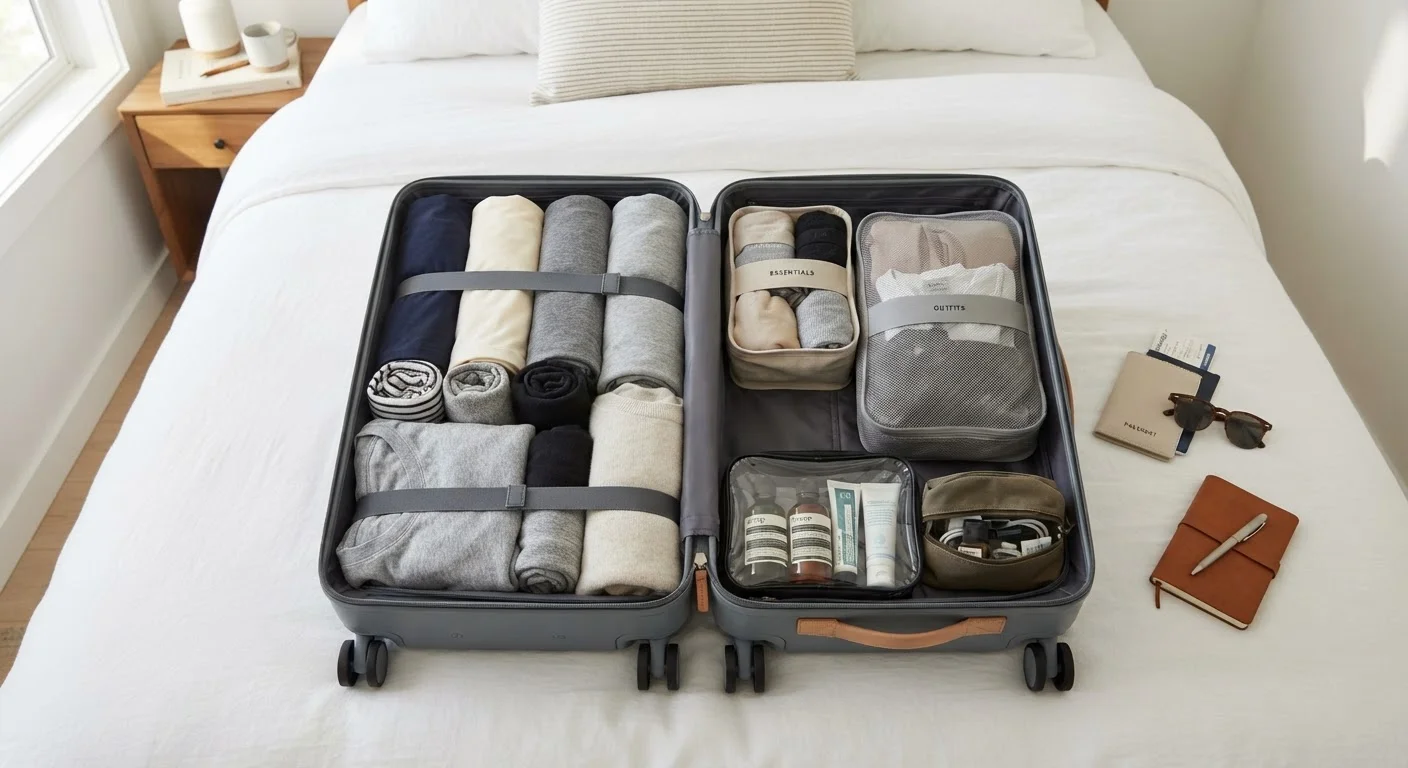
Roll all soft items tightly — this reduces wrinkles and compresses volume better than flat folding. Use packing cubes to group categories (tops, bottoms, undergarments). Load heaviest items closest to the bag's wheeled base or your back (if using a backpack), mid-weight items in the center, and lightest or most frequently needed items on top or in exterior pockets.
Do a final weight and size check
Lift the packed bag. If it feels difficult to hoist into an overhead bin with one hand, it's likely too heavy — most airlines cap carry-on weight between 15–25 lbs, but this varies by carrier and fare class. Use a luggage scale if you have one. Then physically measure the bag and compare it against your airline's published dimensions. Soft-sided bags can often compress slightly; hard-sided bags cannot.
For travelers curious about taking this even further, the one-bag travel philosophy explains what it takes to consolidate your carry-on and personal item into a single bag.
Common Mistakes That Blow the Carry-On Plan
Even well-prepared travelers make predictable errors. The most common: packing for weather that might happen instead of weather that will happen. Check the forecast for your specific travel window — not the seasonal average.
A second frequent failure is footwear. Shoes are bulky and heavy. Two pairs — one comfortable walking shoe and one versatile dressier option — cover the overwhelming majority of two-week trips. Wear the bulkier pair on travel days to save bag space.
Finally, toiletries creep. A full-size shampoo bottle disqualifies your bag at security. Either transfer to 3.4 oz (100ml) or smaller containers, or plan to purchase certain items at your destination. Many hotels also provide basic toiletries — factor that in before packing duplicates. See our guide to the hidden costs of overpacking for a full audit checklist.