

Key Takeaways
One-Bag Travel
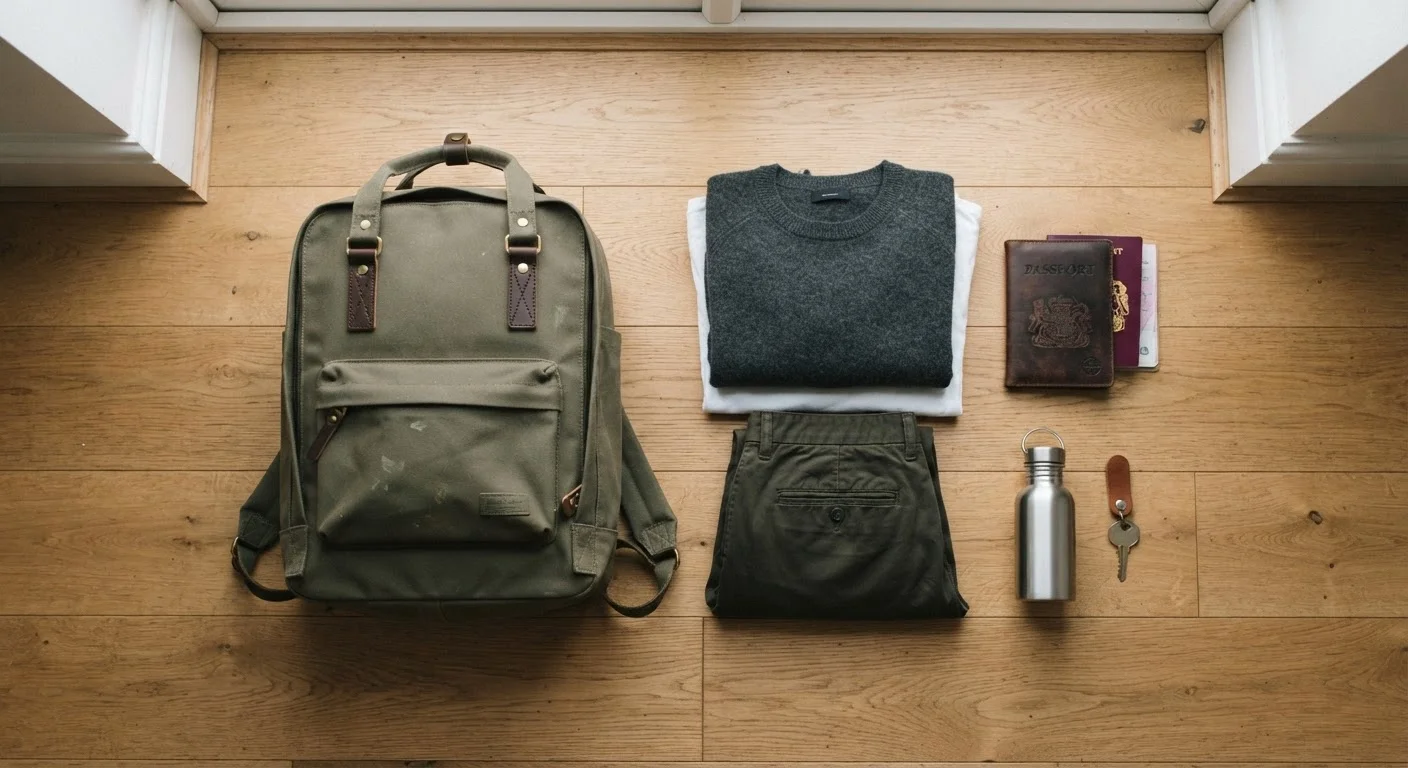
One-bag travel is the practice of taking every item you need for a trip — regardless of its length — in a single carry-on sized bag, with no checked luggage and no personal item bag as overflow. The goal is total mobility: one bag on your back, nothing to check, nothing to wait for at baggage claim. It's a system, not just a packing preference.
Most one-bag travelers target bags in the 20–40 liter range that meet carry-on size limits for major U.S. and international carriers, though exact limits vary by airline and route.
What One-Bag Travel Actually Means
The term gets used loosely, so it's worth being precise. One-bag travel means a single bag — typically a carry-on backpack — is everything you bring. No second bag stashed under the seat. No purse or day bag tucked alongside it. One bag, total.
That constraint is intentional. It forces a set of decisions upfront that most travelers avoid: What do I actually need? What am I carrying out of habit or anxiety? What can I get locally if I really need it?
The approach isn't about minimalism as an identity. It's about removing friction — no checked bag fees, no baggage claim wait, no worrying whether your luggage made the connection. Cutting travel costs often starts with what you don't bring, not what you book.
The Clothing Problem (And the Only Real Fix)
Clothing fills most bags. It's also where most one-bag attempts fall apart. The fix isn't buying special packing cubes or compression sacks — it's building a travel capsule wardrobe before you ever touch your bag.
A capsule wardrobe for travel means choosing pieces that work across multiple outfit combinations: neutral colors, versatile cuts, and fabrics that resist wrinkles and dry fast. Five to seven clothing items can cover most of a week if each piece works with at least two others.
The other half of the equation is laundry. One-bag travel on a two-week trip doesn't mean wearing the same shirt fourteen days straight — it means planning for laundry access every four to five days. Hotel laundry, a local laundromat, or even sink-washing fast-dry fabrics in your room all work. See how to pack a two-week trip into carry-on space for a concrete breakdown.
Test Your Pack Before You Commit
Before a real trip, pack your bag completely and wear it for a few hours around the house or on an errand run. If it's uncomfortable loaded up, that's critical information. A bag that works in theory but strains your back by hour two defeats the purpose of traveling light.
When It Works — and When It Doesn't
One-bag travel is not a universal solution. It thrives in specific contexts and struggles in others.
Where it works well: Urban trips, solo travel, warm-weather destinations, frequent short-haul flights, and trips where you're moving cities every few days. In these scenarios, mobility is a genuine advantage and laundry is usually accessible.
Where it gets harder: Cold-weather trips (bulky layers eat space fast), outdoor or gear-heavy trips (hiking boots alone can fill a bag), trips with formal dress requirements, or travel with young children. As trip-type packing strategy makes clear, your destination should drive your packing method — not the other way around.
Recognizing when one-bag doesn't fit the trip is part of using the philosophy well. Forcing it into the wrong context just creates stress.
$30–$40
Typical checked bag fee per leg on domestic flights
Major U.S. carriers commonly charge per-bag, per-direction fees; amounts vary by airline and fare class.
~20 min
Average domestic baggage claim wait time
Industry estimates suggest passengers wait an average of 15–25 minutes for checked bags after landing at U.S. airports.
1 in 170
Checked bags delayed, lost, or damaged in the U.S.
According to U.S. Department of Transportation data, mishandled bag rates fluctuate but have historically averaged around 5–6 per 1,000 passengers.
The Mental Shift That Makes It Stick
Most people who try one-bag travel and give up do so because they haven't changed how they think about packing — they've just tried to squeeze the same old list into a smaller bag. That doesn't work.
The real shift is moving from what might I need? to what will I almost certainly use? It sounds minor, but it eliminates the "just in case" items that quietly consume space: the fourth pair of shoes, the backup outfit for an occasion that never happens, the full-size toiletry kit.
Why packing light feels hard is often psychological, not logistical. Travelers pack for worst-case scenarios, not likely ones. One-bag travel asks you to bet on the likely case — and accept that if something unexpected comes up, you'll handle it on the ground.
For trips involving multiple travelers, a different approach may be more practical. Coordinating a shared bag system with a partner can achieve similar efficiency without the same individual constraints.