

Key Takeaways
Why Mental Habits Matter More Than Reflexes
Most drivers assume that crash prevention comes down to quick reaction time. In reality, the window between noticing a hazard and a collision is often too short for reflexes alone to save you. What separates consistently safe drivers isn't faster hands — it's a trained mind that spots danger early enough to avoid it entirely.
Defensive driving is the practice of operating your vehicle with the assumption that other drivers, pedestrians, and road conditions may behave unpredictably. It's a mental posture, not a set of tricks. The habits below are used by experienced drivers every time they get behind the wheel — not just on highways or in bad weather, but on every trip.
For new or newer drivers, these habits can be especially valuable. Our guide on teen drivers and the first year behind the wheel explores how early habit formation dramatically reduces crash risk during that critical first year of solo driving.
The Core Defensive Driving Practices
These aren't abstract principles — each one is a concrete mental habit you can start applying on your next drive.
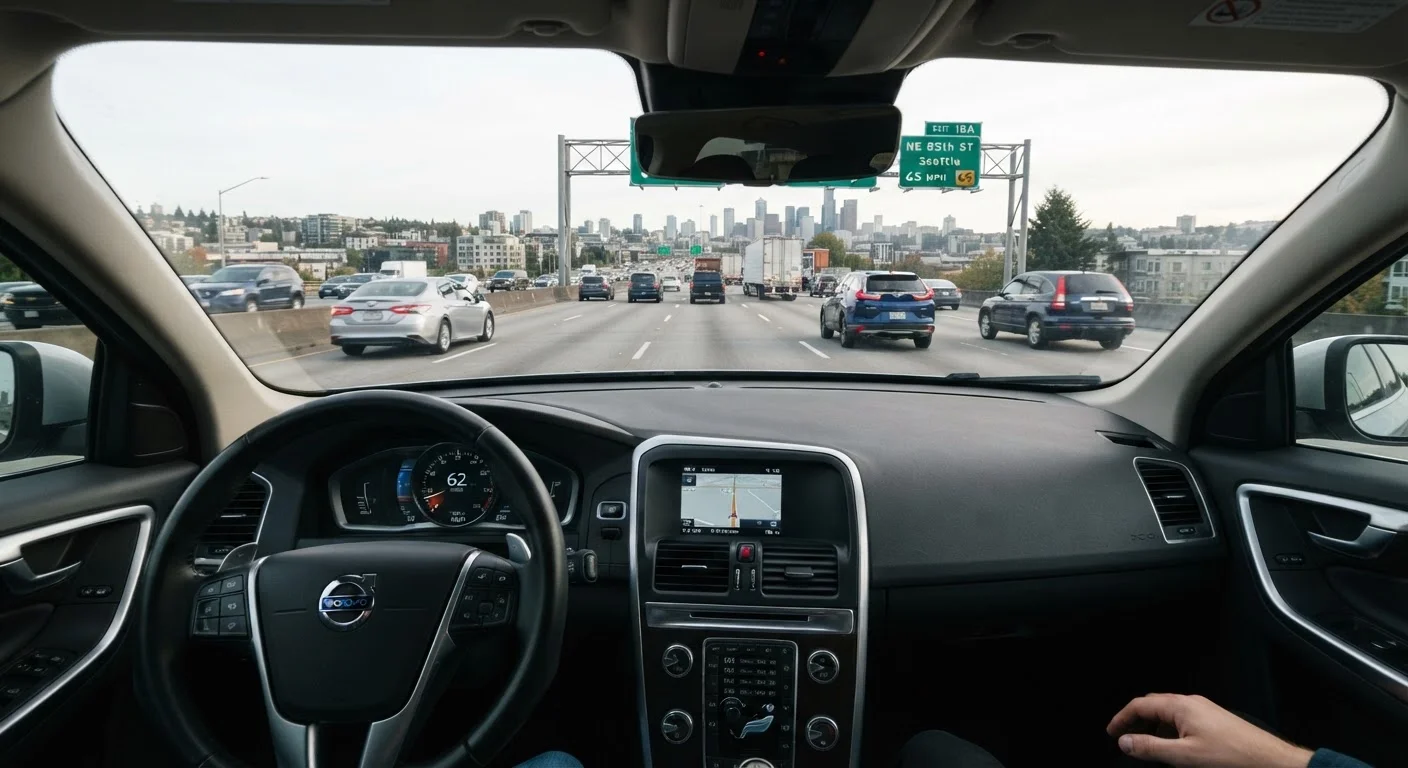
Scan at least 12–15 seconds ahead of your vehicle at all times.
Looking only at the car directly in front of you limits your ability to anticipate slowing traffic, debris, or merging vehicles. Scanning farther ahead gives you time to ease off the throttle gradually rather than brake hard. This also reduces rear-end crash risk for the driver behind you.
Maintain a following distance of at least three seconds in normal conditions — more in rain, fog, or heavy traffic.
Your stopping distance isn't just about your brakes — it includes your perception and reaction time, which together can consume a second or more before your foot even reaches the brake pedal. A three-second gap provides a genuine safety buffer. Wet or icy roads can double the stopping distance your tires actually need.
Check your mirrors every five to eight seconds as a regular rhythm, not just when changing lanes.
Traffic conditions behind and beside you change constantly. A car that was in your blind spot a moment ago may have accelerated past you, or a new one may have moved in. Regular mirror checks keep your mental picture of surrounding traffic current and reduce the chance of a surprise during a lane change or merge.
Identify at least one escape route at all times while driving.
Situational awareness isn't just about the threat directly ahead — it's about knowing where you could go if that threat materialized. Drivers who have mentally mapped an open shoulder, adjacent lane, or gap in traffic respond faster and with more control than those who react purely on instinct.
Treat distraction management as part of the drive — not a side issue.
Cognitive distraction — including hands-free phone calls — meaningfully reduces hazard detection even when eyes are on the road. Research consistently shows that distracted drivers miss hazards that attentive drivers catch. Setting up navigation, adjusting music, or finishing a call before moving is not excessive caution; it's standard defensive practice.
Adjust your driving posture and pace when fatigue is a factor — or stop driving.
Drowsy driving impairs judgment and reaction time in ways that parallel alcohol impairment. Micro-sleeps — brief, involuntary lapses in consciousness lasting just a few seconds — can occur without the driver knowing. No amount of defensive technique compensates for a driver who is genuinely fatigued.
Quick Habits You Can Start Today
You don't need a formal driving course to begin improving. These small adjustments have an outsized effect on your safety margin behind the wheel.
Stopping distance is one area where small changes matter enormously. Speed, tire condition, road surface, and even your reaction time all interact. See our full breakdown of everything that shapes your stopping distance for a detailed look at the physics involved.
Putting It All Together on Every Drive
Defensive driving isn't a mode you switch on for difficult conditions — it's a baseline. The drivers who avoid crashes most consistently are those who make these habits automatic, whether they're driving two miles to the grocery store or two hundred miles on the interstate.
One habit that deserves special attention is following distance. Tailgating is among the most common and most underestimated risk factors on American roads. Our article on why tailgating is more dangerous than most drivers realize breaks down the physics of stopping distance and why the gap in front of you is your most important safety buffer.
Before any long trip, it also pays to make sure your vehicle is in a condition that supports safe driving. A well-maintained car gives you access to every safety margin you've built with good habits. Our pre-trip safety walkthrough covers the essentials so your vehicle doesn't become the variable that catches you off guard.