

| Origin of FIFO | Commercial food service and inventory management |
| Meaning of mise en place | French: 'everything in its place' |
| Most common dead zone | Back corners of base cabinets |
| Toe-kick drawer depth | Typically 3–4 inches — enough for flat cookware |
| Lazy Susan placement | Corner cabinets, pantry shelves, refrigerator |
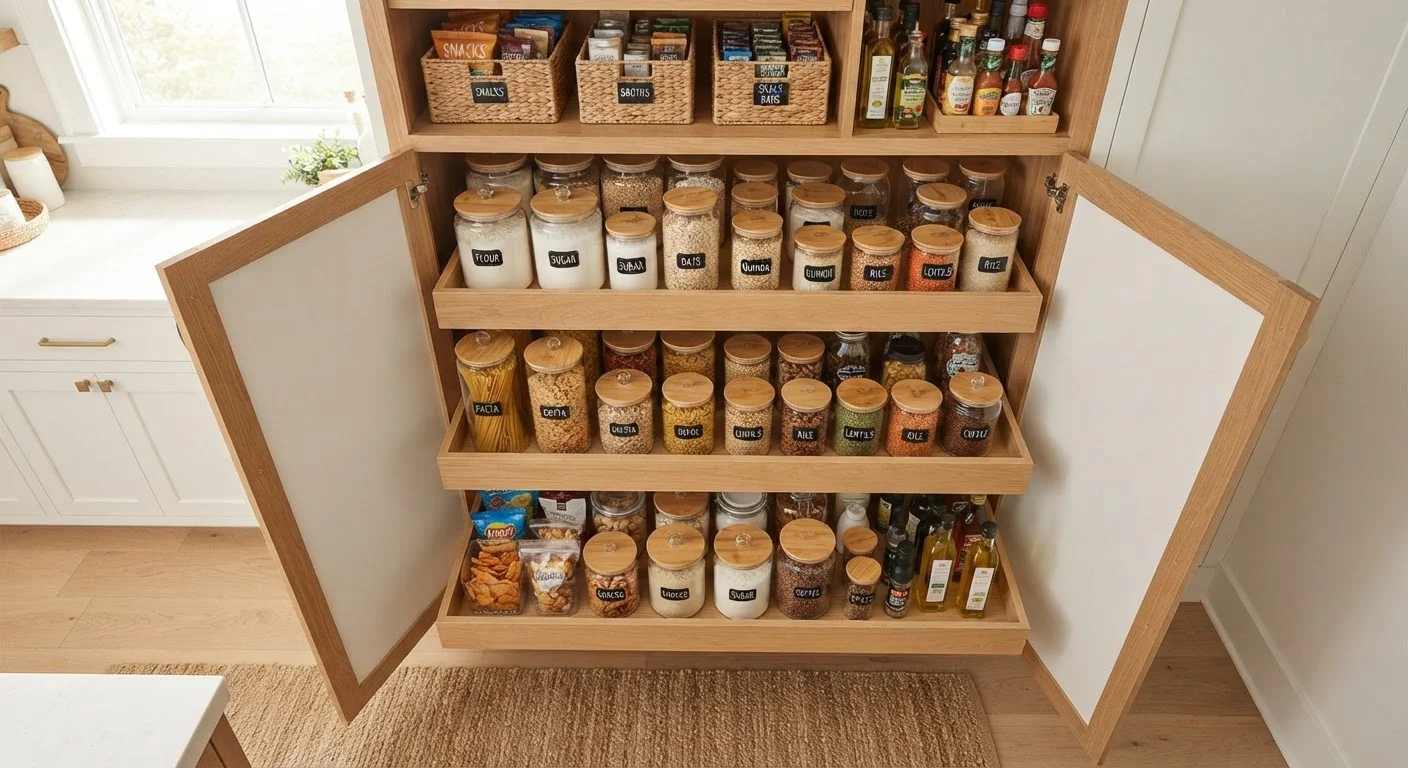
| Primary benefit of decanting | Improved visibility, freshness, and stackability |
Why Kitchen Storage Has Its Own Vocabulary
Kitchen organization guides, cabinet descriptions, and pantry-planning content all use a shared set of terms that aren't always defined when they appear. If you've read about zone storage and wondered what zone means exactly, or encountered FIFO in a pantry article without explanation, this reference is for you.
These terms aren't jargon for its own sake — each one names a specific concept that affects how efficiently a kitchen works. Learning them makes it easier to evaluate what your kitchen actually needs, whether you're rethinking your pantry, shopping for cabinet hardware, or following a kitchen organization audit checklist.
Terms at a Glance
The quick reference below captures the most essential facts about how these concepts are typically applied. Use it alongside the full definitions above when you need a faster lookup.
| Origin of FIFO | Commercial food service and inventory management |
| Meaning of mise en place | French: 'everything in its place' |
| Most common dead zone | Back corners of base cabinets |
| Toe-kick drawer depth | Typically 3–4 inches — enough for flat cookware |
| Lazy Susan placement | Corner cabinets, pantry shelves, refrigerator |
| Primary benefit of decanting | Improved visibility, freshness, and stackability |
For readers working with limited space, many of these concepts — particularly vertical storage, dead zones, and lazy Susans — are explored in depth in the guide to maximizing storage in a small kitchen. If you're managing a pantry shared by multiple people, keeping a shared kitchen organized covers how these systems hold up under heavier daily use.
These Terms Appear Across Many Systems
You'll encounter these terms in product descriptions, organizational guides, and kitchen renovation content. Understanding what they mean helps you evaluate whether a given system or product actually fits your space and habits. For a broader look at how these concepts connect, see the comprehensive guide to organizing a kitchen from scratch.
Once you're comfortable with this vocabulary, the next step is seeing how each method compares in practice. The pantry organization methods comparison walks through the tradeoffs between FIFO rotation, category grouping, and container-based systems so you can choose what fits your household.