

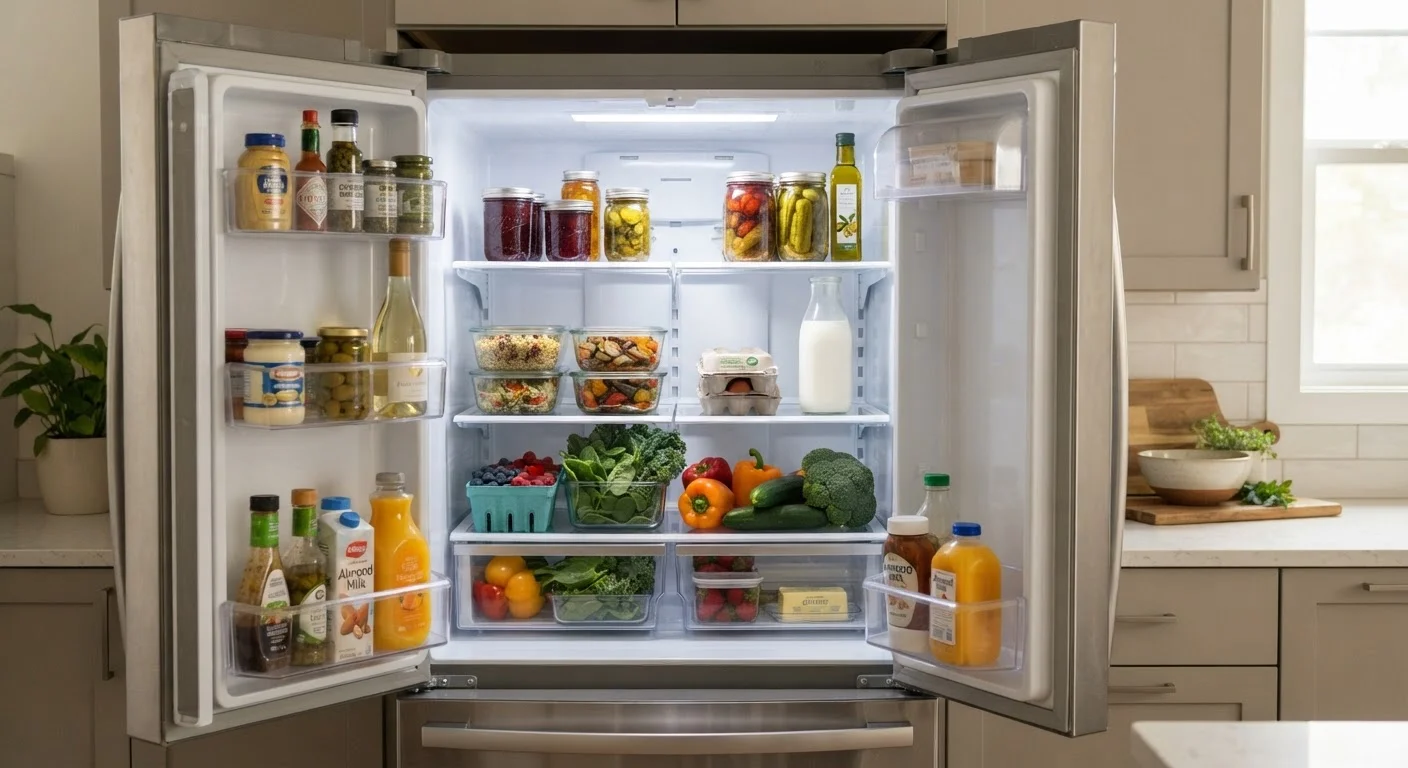
Key Takeaways
Option A
Interior Refrigerator Shelves
The consistently cold, food-safe core of your refrigerator.
Best for: Best for perishables like dairy, raw meat, leftovers, and anything sensitive to temperature swings.
Option B
Refrigerator Door Compartments
The convenient but warmest zone in the fridge.
Best for: Best for condiments, juices, and shelf-stable items that tolerate mild temperature variation.
If you want to keep dairy fresh as long as possible
Interior Refrigerator Shelves
Milk, yogurt, and soft cheeses are temperature-sensitive. The stable cold of interior shelves — especially the middle — protects them far better than the door.
If you need quick-grab convenience for everyday condiments
Refrigerator Door Compartments
Ketchup, mustard, hot sauce, and salad dressings tolerate the temperature swings in door bins without safety or quality concerns.
If you're storing raw meat or poultry
Interior Refrigerator Shelves
Raw protein must stay at or below 40°F consistently. The bottom interior shelf is the coldest and safest location, minimizing cross-contamination risk.
If you want to reduce daily food waste and spoilage
Interior Refrigerator Shelves
Leftovers, cut produce, and opened dairy containers last noticeably longer when stored away from the door's repeated warm-air exposure.
Why Fridge Placement Is a Food Safety Issue, Not Just Organization
Most home cooks treat the refrigerator door as prime real estate — easy to reach, visible, and convenient. But the door is actually the warmest part of your refrigerator. Every time you open the fridge, warm room-temperature air rushes directly into the door compartments. Interior shelves, protected deeper inside the unit, recover their temperature much faster.
The USDA recommends keeping refrigerators at or below 40°F to prevent bacterial growth in perishable foods. Door compartments frequently fluctuate above that threshold during busy meal prep or when kids graze throughout the day. That repeated temperature cycling is where food safety risk quietly builds up.
Getting placement right isn't about being a perfectionist — it's about making your grocery budget work harder and reducing the mental load of wondering whether something is still good. If you're already thinking critically about what's in your kitchen, see how auditing your fridge before shopping fits into a broader waste-reduction strategy.
Head-to-Head: Interior Shelves vs. Door Compartments
The differences between these two zones come down to temperature stability, air exposure, and how much a given food can tolerate fluctuation without spoiling or becoming a safety hazard.
| Criterion | Interior Shelves | Door Compartments |
|---|---|---|
| Average temperature | 35–38°F (stable) | 40–45°F (fluctuates) |
| Best for | Dairy, eggs, meat, leftovers | Condiments, juices, pickles |
| Temperature consistency | High — minimal warm-air exposure | Low — exposed each time door opens |
| Food safety risk | Lower for perishables | Higher for perishables |
| Convenience | Requires reaching inside | Immediately visible and accessible |
| Ideal item examples | Milk, yogurt, raw chicken, leftovers | Ketchup, hot sauce, jam, juice |
The pattern is clear: the more perishable the food, the further from the door it should be. Items like butter sit in a middle ground — many refrigerators include a dedicated butter compartment in the door with a slightly warmer design, which softens butter without spoiling it. That works fine. But applying that same logic to milk or eggs is a common mistake that accelerates spoilage.
What Actually Belongs in the Door (and What Doesn't)
Safe for door storage: Condiments (ketchup, mustard, hot sauce, soy sauce, salad dressings), pickles, jams, jellies, juice cartons, water filter pitchers, and beer or wine. These foods are either high in acid, high in sugar, or have preservatives that make them resilient to mild temperature swings.
Move these to interior shelves: Milk, cream, yogurt, soft cheeses, eggs, deli meats, leftovers, opened broths, raw meat, and cut fruit or vegetables. These items need the fridge's most stable cold zone to stay safe and fresh for their expected shelf life.
Eggs deserve a specific note: many refrigerators include a dedicated egg tray in the door, but food safety guidance generally advises storing eggs in their original carton on an interior shelf. The carton protects against odor absorption and cushions them from temperature changes.
About Egg Storage and Conflicting Advice
You may notice that eggs sold in the US are refrigerated, while eggs in many other countries are stored at room temperature. This difference stems from US egg-washing practices, which remove the protective outer cuticle, making refrigeration necessary. In the US, eggs should always be refrigerated. US food safety guidance generally recommends the interior shelf over the door tray for the most stable temperature.
For households navigating limited fridge space, the same principles that apply to refrigerator organization carry over to pantry planning. See our guide to maximizing storage in tight kitchen spaces for practical shelf-by-shelf strategies.
Organizing Your Fridge by Temperature Zone
Think of your refrigerator in horizontal bands. The bottom shelf is coldest — ideal for raw meat and poultry (stored in a sealed container or on a dedicated tray to prevent drips). The middle shelves are the workhorses: consistent temperature, easy visibility, perfect for dairy, leftovers, and prepared foods. The top shelf is slightly warmer and works well for drinks, condiments that didn't fit the door, and ready-to-eat foods you grab frequently.
The crisper drawers are humidity-controlled, not just colder — one drawer typically holds higher humidity for leafy greens and herbs, the other lower humidity for fruits and harder vegetables. Mixing these up causes wilting or premature ripening.
Once you've applied these placement principles, you may find that storage terminology you encounter — like FIFO rotation or mise en place for your fridge — starts to make more practical sense. The reference guide to common kitchen storage terms is a useful companion for putting the vocabulary into action.