

Key Takeaways
The Real Reason Tidying Doesn't Last
You spend 20 minutes clearing counters, wiping surfaces, and stacking things neatly — and by the next evening, the kitchen looks just as chaotic as before. This is one of the most common frustrations home cooks face, and it has nothing to do with laziness or bad habits.
The problem is that tidying is reactive. It deals with where things ended up, not why they ended up there. If the underlying storage layout doesn't match how your household actually uses the kitchen, clutter will keep returning — reliably, predictably, and quickly. The fix isn't more effort at cleanup time. It's addressing the structural reasons clutter accumulates in the first place.
If you've never done a full evaluation of what's working and what isn't, the Kitchen Organization Audit checklist can help you work through every drawer and cabinet systematically.
Tidying without editing — moving items around rather than removing what doesn't belong.
Why it happens: Decisions about what to keep feel permanent and overwhelming, so people defer them and tidy around the problem instead.
Storing items based on where they fit, not where they're used.
Why it happens: When kitchens are first set up, convenience often takes a back seat to fitting things into available space.
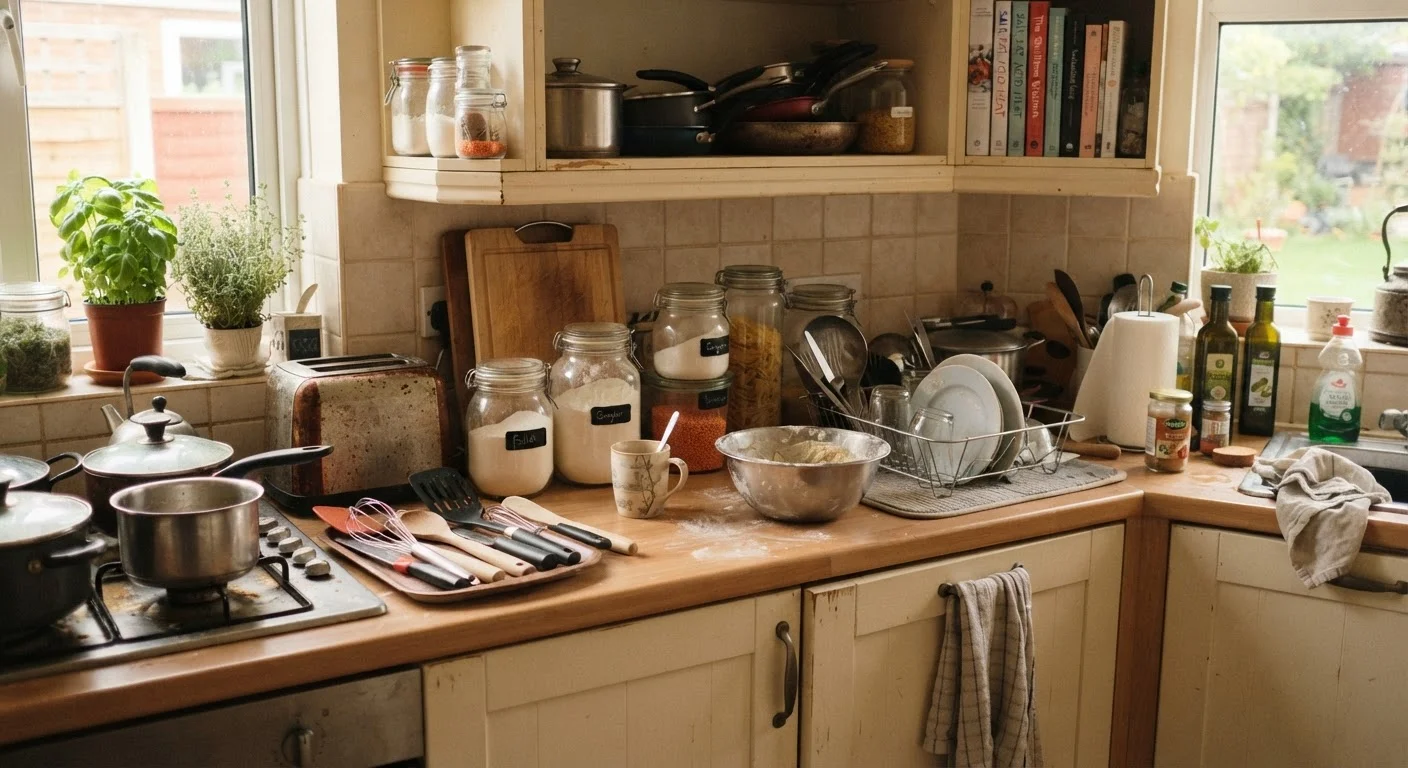
Counter surfaces become default landing zones for items that don't have a real home.
Why it happens: It's faster to set something on the counter than to decide where it belongs — especially for items that are used semi-regularly.
Keeping multiples of tools and gadgets that serve the same function.
Why it happens: Items accumulate over time as gifts, impulse purchases, or upgrades where the original was never discarded.
Organizing systems that work for one person but break down when the whole household uses the kitchen.
Why it happens: The person who set up the system is the only one who knows where things go — so everyone else defaults to the nearest flat surface.
Building Systems That Actually Hold
Once you've identified which mistakes are driving the clutter, the next step is putting better systems in place — ones designed around your real routines, not an idealized version of them.
80%
Of clutter linked to decision fatigue
Professional organizers commonly note that most household clutter results from deferred decisions about where items belong, not a lack of storage space.
1 in 3
Kitchen items used rarely or never
Home organization research suggests roughly a third of items stored in the average kitchen are used infrequently enough that they would be better stored elsewhere or removed.
Start by defining clear activity zones: prep, cooking, cleaning, and storage should each have a dedicated area. Items used daily should be reachable without moving anything else. Items used occasionally belong in higher cabinets or the back of drawers. If three people regularly use the kitchen, clear zones reduce the friction of multiple people working around each other — for more on that, see strategies for shared kitchens.
For kitchens where cabinet space is genuinely tight, vertical storage, door-mounted organizers, and smarter grouping can make a substantial difference without any renovation. The Small Kitchen, Full Pantry guide covers these approaches in practical detail.
If you're resetting your kitchen from scratch or feel like the current layout has never really worked, organizing a kitchen from scratch walks through zones, pantry systems, and counter management as a complete reset process.
The goal isn't a perfect kitchen — it's one where putting things away takes less thought than leaving them out.