

Key Takeaways
Why Starting From Scratch Works Better Than Patching
Most cluttered kitchens got that way gradually — a utensil here, a gadget there, expired cans pushed to the back. Trying to organize around existing chaos rarely works. When you start from zero, you see exactly what you have, identify what you genuinely use, and build a system that fits your real cooking habits rather than inherited arrangements.
Begin by pulling everything out of every cabinet, drawer, and the pantry. Sort items into three groups: keep, donate, and discard. Be honest about duplicates and tools you haven't touched in a year. A vegetable peeler you use weekly earns prime real estate. A specialty unitasker used once belongs in a donation box.
This purge phase is the most time-consuming step, but it's also the most impactful. Organizing fewer items is dramatically easier, and you'll stop losing things under clutter you don't need. Once the counters are clear and only useful items remain, you're ready to build a logical system. For a structured way to evaluate what's working after your reset, the Kitchen Organization Audit checklist walks through every drawer and cabinet methodically.
Build Your Kitchen Around Zones
The most effective kitchen layouts group tools, ingredients, and surfaces by task — a concept called zone-based organization. Rather than storing things by category (all pots together, all spices together), you store them by where you use them. A coffee station holds the grinder, filters, and mugs in one spot. A baking zone keeps flour, measuring cups, mixing bowls, and baking sheets together near the oven.
Common zones for most home kitchens include: prep (cutting boards, knives, peelers), cooking (stovetop-adjacent pots, pans, oils, and spatulas), baking, beverages, storage and packing (containers, wraps, bags), and cleaning (near the sink). Not every kitchen needs every zone — build the ones that match how you actually cook.
Zone-based kitchen organization goes deeper on mapping these areas to your specific cooking style. Sharp knife skills become far less frustrating when your cutting board, knives, and prep tools are already in one place — see knife skills every home cook needs for technique guidance once your prep zone is set up.
When setting up your prep zone, position your cutting board so it faces the trash or compost bin — a simple triangle of board, trash, and sink cuts prep cleanup time noticeably.
Reducing unnecessary movement during prep makes cooking feel smoother and encourages tidying as you go, which keeps the kitchen from accumulating mess mid-meal.
Store your most-used spices in a single layer in a shallow drawer rather than a tall rack — you can read every label at a glance without picking anything up.
Drawer spice storage is consistently praised by professional cooks for speed and visibility; it also frees up counter and cabinet space for other items.
Cabinet and Drawer Strategy
Assign your most-used items to the most accessible spots: between hip and shoulder height, in front-facing positions, and in drawers rather than deep cabinets when possible. Reserve high shelves for rarely used items like holiday serving dishes or large stockpots. Low cabinets work well for heavy items — cast iron pans, stand mixer bowls — because they don't require lifting overhead.
Inside drawers, dividers prevent tool migration. Nest measuring cups and spoons together on a ring or in a small bin so they stay grouped. For pots and pans, vertical dividers or a simple rack let you pull one item without unloading a stack. Lids stored flat inside a pot are almost impossible to retrieve quickly — a vertical lid organizer or a dedicated drawer solves this.
Drawer liners reduce sliding and protect surfaces. Labels — even simple masking tape and a marker — help everyone in the household return things to the right spot, which matters especially in shared kitchens where multiple people cook. Unfamiliar with terms like FIFO or mise en place that come up in organization guides? The reference guide to common kitchen storage terms defines them plainly.
Countertop and Pantry Management
Clear countertops are one of the biggest functional upgrades you can make. Every item left out permanently competes for your prep space and adds visual noise that makes the kitchen feel chaotic. The test: if you don't use it at least every two days, it probably belongs in a cabinet. Appliances like toasters and coffee makers earn counter space through daily use; a bread machine used monthly does not.
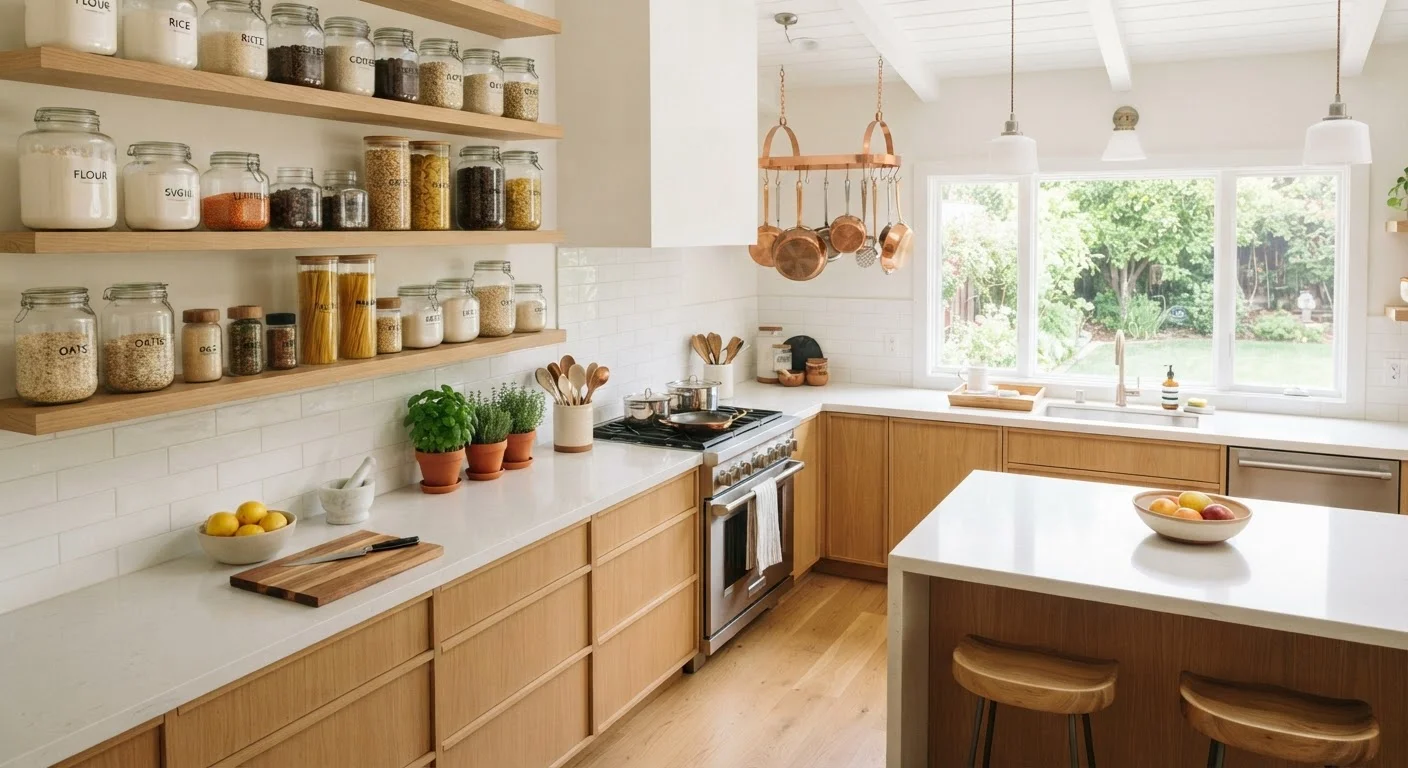
In the pantry, group items by meal type or ingredient category — baking supplies, canned goods, grains and pasta, snacks, condiments. Store older items in front and newer purchases behind, a system known as FIFO (first in, first out). This simple rotation prevents the common frustration of finding expired food buried at the back. Clear containers for bulk staples like rice, oats, and flour let you see levels at a glance without pulling everything out.
Avoid Over-Buying Storage Products
It's tempting to buy bins, baskets, and organizers before you know what you actually need. Purchasing storage products before you've purged and planned usually results in containers that don't fit or solve the wrong problems. Purge first, measure your spaces, then buy only what fills a specific gap.
Label pantry shelves, not just containers. When you restock quickly, labeled shelves ensure items return to the right spot even when you're in a hurry. For foundational cooking skills that work best in a well-organized kitchen, the Cooking Basics hub covers essential techniques from eggs to knife work.
Daily Habits That Keep Order
An organized kitchen only stays that way with small, consistent habits. The most effective one: a two-minute reset after every cooking session. Wipe the counters, return tools to their zones, and load the dishwasher or wash what you used. Skipping this step even a few days in a row is how systems unravel.
A weekly five-minute pantry check — scanning for items running low or approaching expiration — prevents both food waste and the frustration of starting a recipe only to find a missing ingredient. It also makes grocery shopping faster because you know exactly what you need.
If your kitchen is shared, agree on return rules with everyone who uses it. A wall-mounted label or a quick verbal agreement about where things live makes a bigger difference than any storage product. Small frictions — a lid that never goes back, a drawer that catches — should be fixed immediately rather than tolerated, because minor annoyances compound over time into habits that undo your system.
A well-organized kitchen isn't a destination you arrive at once. It's a baseline you maintain through small, repeated actions. Build those habits into your existing routine — right after dinner, right before the weekend shop — and the kitchen stays functional without requiring major periodic overhauls.