

Key Takeaways
Start here
What Is Zone-Based Kitchen Organization?
Next
The Five Core Kitchen Zones
Then
How to Map Zones to Your Actual Kitchen
Watch out for
Common Zone Mistakes (and How to Fix Them)
Keep it going
Keeping Your Zones Working Long-Term
What Is Zone-Based Kitchen Organization?
Most kitchen clutter isn't caused by too much stuff—it's caused by stuff stored in the wrong places. When your colander lives across the kitchen from your sink, or your spices sit far from the stove, every meal turns into a small scavenger hunt. Zone-based organization fixes this by grouping tools and supplies around the tasks they support.
The core idea is simple: instead of organizing by category (all pots together, all utensils together), you organize by activity. Everything you use at the stove lives near the stove. Everything you use at the cutting board lives near the cutting board. The result is a kitchen where your hands reach for something and it's actually there.
This approach is part of a broader system covered in our complete kitchen organization guide, but you don't need to do everything at once. Zones are a strong starting point on their own.
Zone-based organization
A storage and layout approach that groups tools, equipment, and supplies by the cooking task they support, rather than by item type or size.
Prep zone
The area of your kitchen dedicated to getting food ready—chopping, measuring, mixing—typically anchored by your cutting board and located near the sink.
Point of first use
A storage principle that says each item should live as close as possible to the spot where you first reach for it during cooking.
Zone drift
The gradual breakdown of a zone system when items are returned to the wrong place over time, eventually making the zones indistinguishable from general clutter.
Mise en place
A French culinary term meaning 'everything in its place'—the practice of gathering and organizing all ingredients and tools before cooking begins.
The Five Core Kitchen Zones
While every kitchen is different, most cooking workflows break down into five functional zones:
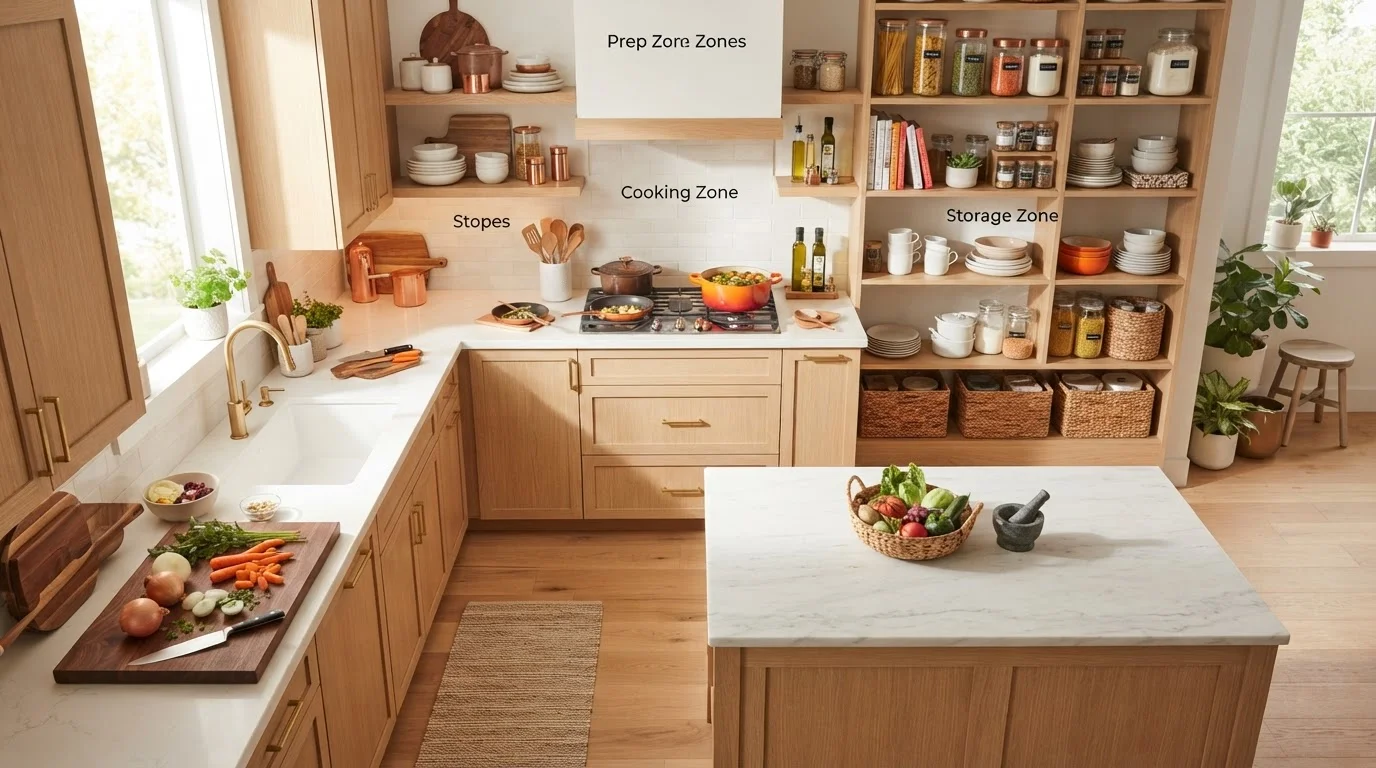
- Prep zone: Your cutting board, knives, peeler, grater, mixing bowls, and measuring cups. This area should sit near your sink so rinsing and chopping happen in sequence. Good knife skills matter more when your knives are stored right where you need them.
- Cooking zone: Pots, pans, cooking utensils, pot holders, and your most-used spices and oils—all within arm's reach of your stove or cooktop. This is not the place for rarely used appliances or backup supplies.
- Storage zone: Pantry shelves, dry goods cabinets, and the refrigerator. This zone is where food lives before it's needed. Keeping it organized directly supports cooking from what you already have.
- Cleaning zone: Dish soap, sponges, trash and compost bins, and drying racks belong near the sink. Keeping cleaning supplies consolidated means tidying up is fast and automatic.
- Serving zone: Plates, bowls, glasses, and serving utensils. Ideally positioned close to the table or dining area so plating and serving don't require carrying food across the kitchen.
How to Map Zones to Your Actual Kitchen
Zones don't need perfect, dedicated counters—they need logical placement. Start by observing where you naturally stand and move during a typical meal. Those spots are your zone anchors.
Walk through a recent dinner in your memory: Where did you chop vegetables? Where did you stir the pot? Where did you set the finished dish? Each answer points to a zone location. Then ask: Are the tools I needed actually stored near those spots? If not, that's your first move.
A few practical placement principles:
- Store items at the point of first use—not where they happened to fit when you moved in.
- Keep countertops clear except for items you use daily. Everything else goes into a cabinet.
- Vertical storage (wall hooks, magnetic knife strips, shelf risers) can create zone space where counter space doesn't exist.
You don't need to buy anything to start. Rearranging what you already have is often enough to feel a meaningful difference. For a structured way to evaluate what's working, try our kitchen organization audit checklist.
Common Zone Mistakes (and How to Fix Them)
Even well-intentioned reorganizations run into the same few problems:
Start With One Zone, Not All Five
Reorganizing your entire kitchen in one session is exhausting and often leads to half-finished results. Pick the zone that causes you the most daily friction—usually prep—and get that one right first. Once it feels intuitive, move to the next. Small wins build momentum.
- Storing by size, not by use
- Nesting all your bowls together seems logical until you realize your prep bowl and your serving bowl live in two different zones. Group by task first, size second.
- Putting convenience items in inconvenient places
- The coffee maker shouldn't compete for counter space in the prep zone. Give frequently used appliances their own dedicated spot—ideally in a lower-traffic area.
- Over-stocking the cooking zone
- Not every pan needs to be within reach of the stove. Keep the two or three you use most often accessible; the rest can go in a lower cabinet or pantry.
- Ignoring the prep-to-stove flow
- If your prep and cooking zones are on opposite sides of the kitchen, you'll constantly carry food across the room. Whenever possible, keep these two zones adjacent or connected by a clear path.
Zone organization also pairs naturally with the mise en place habit—getting everything ready before you cook. When your prep zone is logical, mise en place takes half the time.
Keeping Your Zones Working Long-Term
Zones drift. A bag of chips lands in the prep zone, a pot migrates to the cleaning zone, and within a few weeks the system unravels. This isn't a failure—it's normal. The fix is brief, consistent maintenance rather than periodic overhauls.
A two-minute reset at the end of cooking—returning each item to its zone—is enough to keep most kitchens functional. Weekly, a five-minute scan of each zone helps catch drift before it compounds. Our article on habits that keep kitchens organized covers these routines in more depth.
If your zones keep breaking down in the same spot, that's a signal to adjust the zone, not just your discipline. A system that fights your natural habits won't survive. Redesign it until it fits how you actually cook—then it largely takes care of itself.
Zone organization is part of a broader approach to making your kitchen work for you, not against you. It complements good meal planning habits and the foundational skills covered in cooking basics—all of which make daily cooking feel less like a chore and more like something you're actually in control of.