

Key Takeaways
Mise en Place
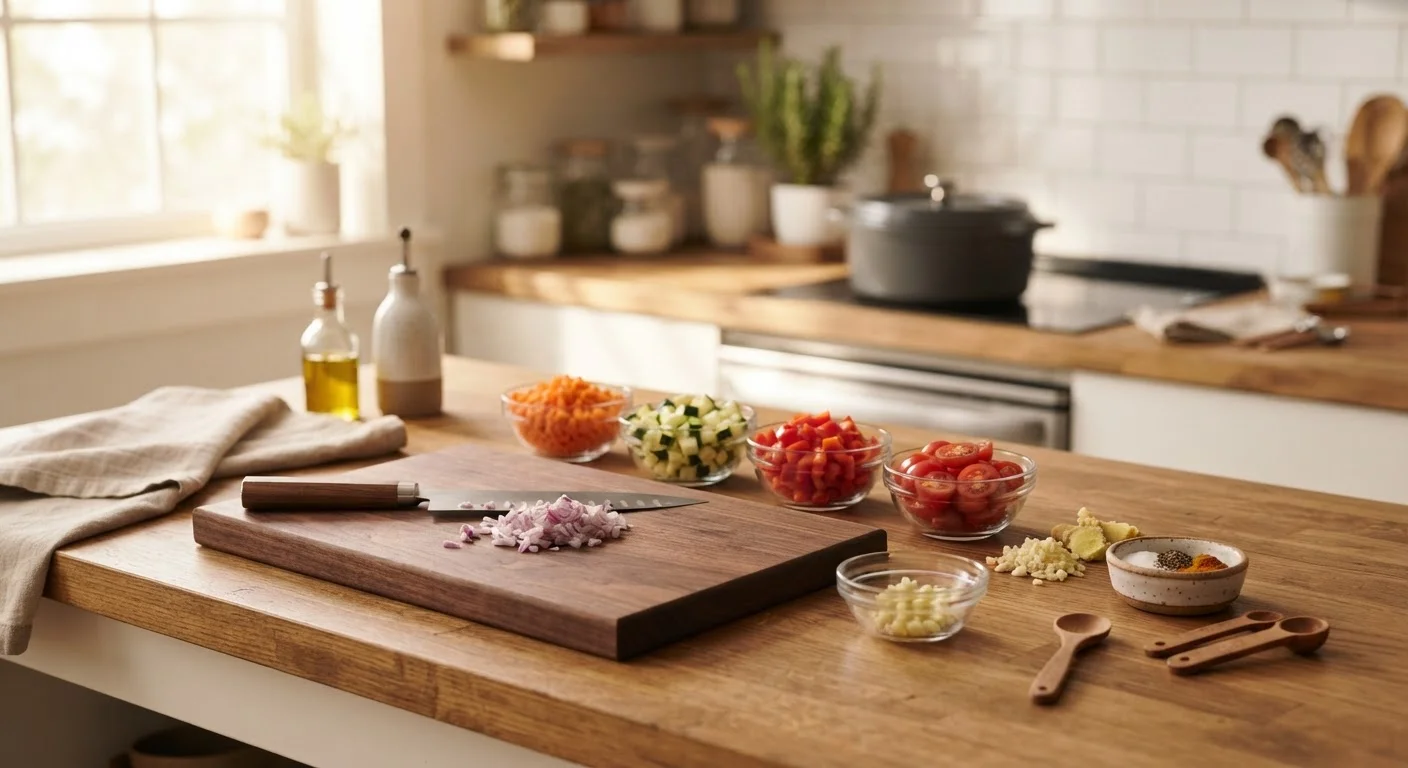
Mise en place (pronounced "meez ahn plahs") is a French culinary phrase meaning "everything in its place." In practice, it means preparing and organizing all your ingredients and tools before you start cooking — chopping vegetables, measuring spices, and setting out equipment ahead of time. This habit keeps you focused and prevents mid-recipe scrambles.
In professional kitchens, mise en place extends beyond individual recipes to full station setup — each cook's entire workspace organized for an entire service shift.
Why Home Cooks Struggle Without It
Most cooking stress happens in the gap between reading a recipe and actually executing it. You start sautéing onions, then realize you still need to mince the garlic — and now the onions are burning. You reach for paprika and discover the jar is empty. These moments aren't just frustrating; they're the reason meals take longer and turn out inconsistently.
Mise en place closes that gap. It shifts the mental load of a recipe to before the heat goes on, when you have the most control and the least pressure. Professional cooks rely on it not because they have more time — they often have less — but because it makes their work predictable and repeatable.
For home cooks, adopting even a basic version of this habit can change how cooking feels. It's not about being fussy or precise; it's about removing obstacles before they have a chance to derail you. If you've ever felt like recipes are harder than they should be, the missing piece is often preparation, not skill.
See how a pre-cook checklist can formalize this habit and catch overlooked details before they become mid-recipe problems.
How to Actually Do It at Home
Applying mise en place doesn't require culinary training. The process follows three straightforward steps before any cooking begins:
- Read the full recipe first. Don't skim — read it start to finish. Note every ingredient and the order in which it's used. This is where most home cooks skip ahead too quickly.
- Prep and portion all ingredients. Chop, measure, rinse, and organize everything before touching the stove. Group ingredients that go into the pan at the same time. Small bowls or ramekins work well; even paper cupcake liners can hold measured spices.
- Set out your tools and equipment. Pull out the pan, spatula, lid, colander — anything the recipe calls for. Check that your cutting board is clean and your knife is accessible.
The actual cooking then becomes a matter of following steps in sequence, not improvising around missing pieces. You're executing a plan rather than solving problems on the fly.
Start Small: One Bowl Per Step
If pulling out a dozen prep bowls feels like too much, start with just one or two for the ingredients that need to be added at the same time. Even partial mise en place — prepping just your aromatics before starting — delivers noticeable results. Build the habit gradually rather than overhauling your entire process at once.
Good knife skills make the prep stage faster and safer — efficient chopping is a natural complement to mise en place practice.
Connecting Prep to a Bigger Kitchen System
Mise en place works best when your kitchen supports it. If you spend five minutes hunting for a measuring spoon or digging through a cluttered spice cabinet just to get started, the habit loses some of its benefit. Organizing your kitchen around how you actually cook makes prep faster and more intuitive.
Zone-based kitchen organization — grouping tools and ingredients by task — means your prep area already has what you need nearby. When your cutting board, knives, and prep bowls live in one dedicated zone, the mise en place process becomes almost automatic.
This same principle scales up into weekly meal planning. Prepping shared ingredients — diced onions, cooked grains, washed greens — for several meals at once applies the mise en place mindset to an entire week, not just a single recipe. If you're skeptical that meal planning requires too much effort, it's worth reconsidering: common meal planning myths often overstate how complicated it needs to be.
70%
Of home cooks report mid-recipe ingredient scrambles
According to surveys on home cooking habits, the majority of non-professional cooks frequently encounter missing or unprepped ingredients after they've already started cooking.
30–40%
Reduction in active cooking errors with structured prep
Culinary education research suggests that pre-measuring and organizing ingredients before cooking significantly reduces common errors like missed steps and incorrect quantities.
Mise en place also reduces food waste. When ingredients are prepped and visible before cooking, you're less likely to forget something in the back of the fridge or overshoot a portion. The habit creates a small feedback loop — clarity in prep leads to better decisions throughout the meal.