

Key Takeaways
Home Energy Audit
A home energy audit is a systematic assessment of how energy flows through your home — where it's used efficiently and where it's being wasted. An auditor examines the building envelope, heating and cooling systems, insulation, appliances, and air leakage to build a complete picture of your home's energy performance. The findings point homeowners toward specific upgrades that can reduce energy waste.
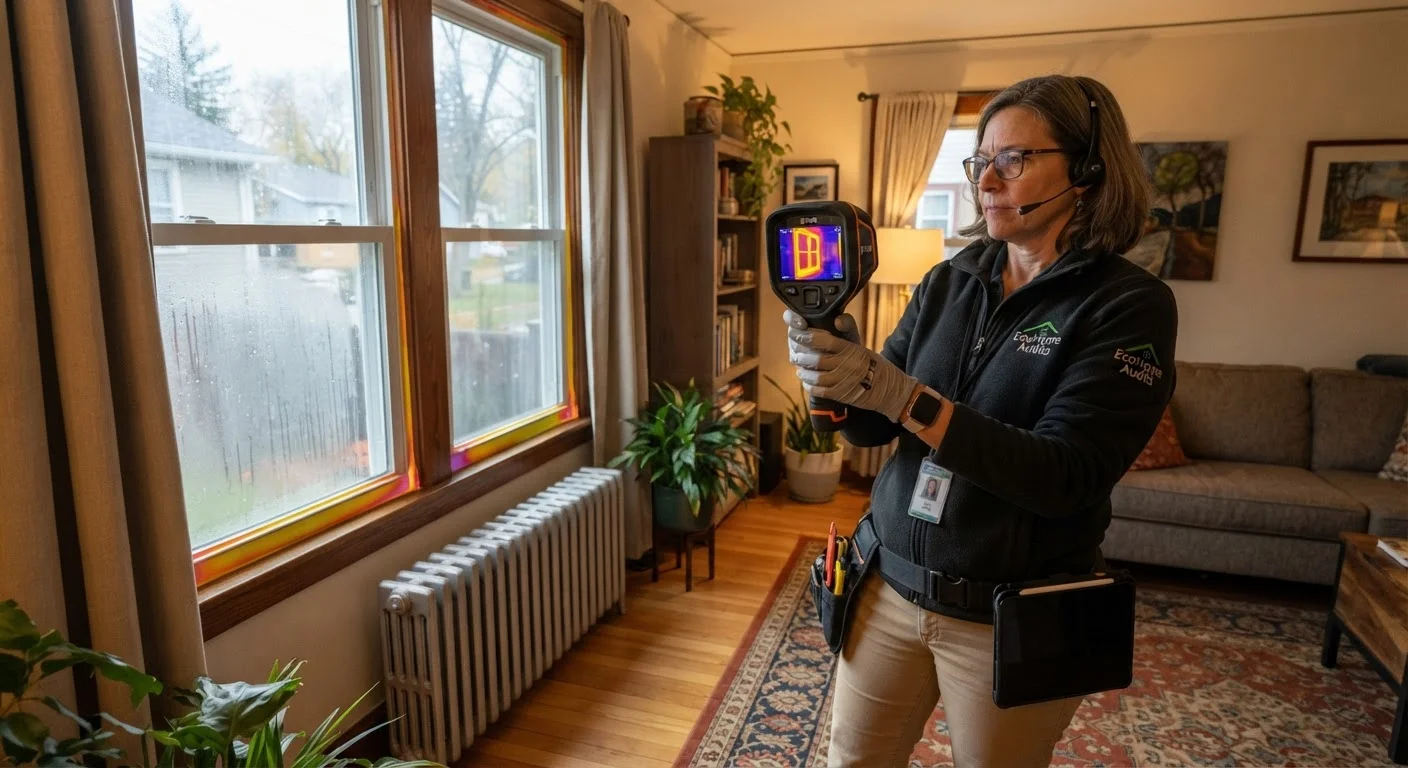
Professional audits often use tools such as blower door tests, which depressurize the home to measure air infiltration rates, and infrared thermography cameras that visualize temperature differences in walls, ceilings, and floors.
What an Energy Audit Actually Examines
Many homeowners picture an energy audit as someone walking around with a clipboard, but a professional assessment is considerably more detailed. Auditors evaluate several interconnected systems and areas of the home:
- Building envelope: Walls, roof, foundation, windows, and doors — the surfaces that separate conditioned interior air from the outdoors.
- Air sealing: Gaps around pipes, electrical outlets, attic hatches, and other penetrations where unconditioned air infiltrates.
- Insulation levels: Attic, basement, crawlspace, and wall insulation are measured against current standards for your climate zone.
- Heating and cooling equipment: Age, efficiency ratings, duct integrity, and maintenance status of HVAC systems.
- Water heating: The type, age, and efficiency of your water heater, which typically accounts for 14–18% of a home's energy use.
- Appliances and lighting: Major appliances and lighting loads that contribute to baseline electricity consumption.
If you've been reading your utility bills for signs of waste, an audit is the natural next step — it translates those cost signals into specific physical causes.
The Diagnostic Tools Professionals Use
What separates a professional audit from a DIY walkthrough is the use of specialized diagnostic equipment that reveals problems invisible to the naked eye.
Blower Door Test
A powerful, calibrated fan is sealed into an exterior doorframe and used to depressurize the home. This reveals exactly how much air leaks in and out — a metric called ACH — and helps identify where the leaks are concentrated. Homes with high infiltration rates spend significantly more to heat and cool because conditioned air is constantly escaping.
Thermal Imaging
An infrared camera captures temperature differences across surfaces. Cold spots in walls indicate missing or settled insulation; warm patches near the ceiling in winter can reveal air bypasses into the attic. This tool makes the invisible visible in a way that dramatically speeds up diagnosis.
Combustion Safety Testing
Auditors also check gas appliances and fireplaces for backdrafting — a condition where combustion gases are drawn back into living spaces rather than venting safely outside. This is a safety check as much as an efficiency one.
Ask for Utility Bill History Before the Audit
Before your scheduled audit, gather 12–24 months of utility statements or request usage data directly from your provider. Bringing this data to the auditor gives them a consumption baseline that helps them prioritize which systems to scrutinize most closely. Many utility company portals allow you to download usage history as a PDF or spreadsheet.
Beyond equipment, auditors review your utility usage history, often 12–24 months of billing data, to look for seasonal patterns or unexplained consumption spikes that point toward specific system failures.
The Most Common Problems Audits Uncover
While every home is different, professional auditors consistently find a short list of recurring issues across American housing stock:
25–40%
Energy lost to air leakage in typical U.S. homes
The U.S. Department of Energy estimates that air infiltration accounts for a substantial share of heating and cooling energy loss in American homes.
20–30%
Conditioned air lost through leaky duct systems
According to the U.S. Department of Energy, duct leakage in homes with forced-air systems can result in significant energy losses, especially when ducts pass through unconditioned spaces.
~14–18%
Share of home energy used for water heating
The U.S. Energy Information Administration attributes roughly this share of residential energy consumption to water heating in a typical American household.
- Air leakage at the top and bottom of the home: Attic floors and basement rim joists are the most common sites for significant air infiltration.
- Under-insulated attics: Building codes have tightened considerably over the decades, and older homes often have insulation levels well below current recommendations for their climate zone.
- Duct leakage: In homes with forced-air HVAC systems, duct networks running through unconditioned spaces like attics or crawlspaces can lose 20–30% of heated or cooled air before it reaches living areas.
- Outdated water heaters: Tank-style water heaters older than ten to twelve years often operate well below their rated efficiency as sediment accumulates.
For a deeper look at insulation options once you know what's lacking, see our guide to common insulation materials and where they're used.
How to Get an Audit and What to Expect
The most accessible starting point is your utility company. Many electric and gas utilities offer free or low-cost audits to residential customers, and income-qualified households may be eligible for weatherization assistance through federal programs such as the Department of Energy's Weatherization Assistance Program.
If you hire a private auditor, look for credentials from recognized certification bodies such as the Building Performance Institute (BPI) or the Residential Energy Services Network (RESNET), which trains and certifies Home Energy Raters (HERs).
After the audit, you'll receive a written report. A thorough report includes:
- Measured findings for each system inspected
- Specific locations of air leaks and insulation gaps
- Recommended improvements, often ranked by estimated impact
- Notes on any safety concerns found during combustion testing
Use this report as a planning document. Not every recommendation needs to be acted on immediately or all at once. Prioritize by impact, budget, and whether any upcoming renovations create a natural opportunity — for example, adding insulation when a roof is already being replaced.
Once you've addressed the items your audit flags, a seasonal home efficiency checklist can help you maintain those gains and catch new issues before each heating and cooling season. And if you're building a broader strategy, our complete guide to whole-home energy efficiency covers every major system in context.