

Key Takeaways
Why Energy Myths Are So Persistent — and So Costly
Energy efficiency advice spreads quickly through neighborhoods, home improvement forums, and well-meaning family members. The problem is that a significant portion of that advice is either outdated, oversimplified, or simply wrong. Acting on bad information doesn't just fail to save money — it can actively increase your utility bills or put unnecessary wear on your home's systems.
This article works through the most common misconceptions homeowners encounter, correcting each one with what the evidence actually supports. If you're looking to go further after clearing up these myths, a professional home energy audit can identify where your specific home is losing energy and where upgrades will have the most impact.
Myth
Turning the thermostat way up will heat your home faster.
Fact
A higher thermostat setting doesn't make your heating system work faster — it just makes it run longer to reach the target temperature.
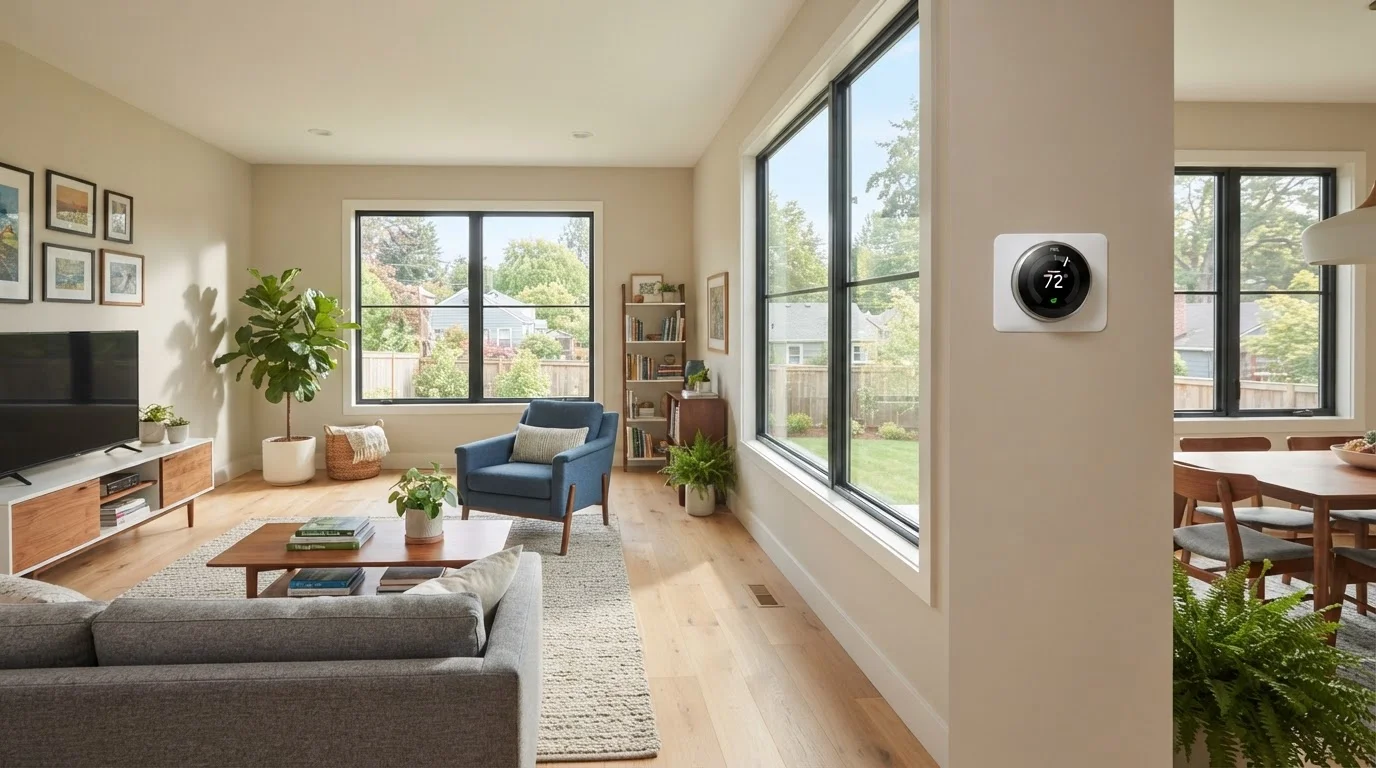
Most conventional furnaces and heat pumps deliver heat at a fixed rate regardless of how high you set the thermostat. Setting it to 85°F when you want 70°F won't warm the space any sooner — it will simply overshoot the temperature you actually want, wasting energy in the process. A programmable or smart thermostat that gradually brings your home to the desired temperature on a schedule is a more efficient approach.
Myth
Closing vents in unused rooms saves energy by redirecting airflow.
Fact
Closing vents in a forced-air system typically creates pressure imbalances that can reduce efficiency and stress the equipment.
Forced-air HVAC systems are designed to move a specific volume of air through the home. Closing vents doesn't eliminate that pressure — it pushes back against the blower, which can cause the system to work harder, increase duct leakage, and in some cases shorten equipment life. If you genuinely want to condition only part of your home, a properly zoned system or a ductless mini-split is a more appropriate solution than blocking existing vents.
Myth
Leaving lights and electronics on uses less energy than turning them off and on repeatedly.
Fact
For virtually all modern home lighting and electronics, turning devices off when not in use saves energy — the startup surge is negligible.
This myth may have had some basis with older fluorescent lighting, where frequent switching could shorten bulb life. But modern LED bulbs and electronics don't experience meaningful wear from switching, and the tiny surge of power at startup is far smaller than the energy drawn by leaving a device on. For electronics that draw standby power even when switched off at the device level, using a power strip with an on/off switch is an effective way to cut that background consumption.
Myth
Energy-efficient appliances will dramatically lower your bill on their own.
Fact
Efficient appliances reduce energy per use, but overall consumption still depends heavily on how often and how you use them.
An energy-efficient washing machine uses less water and electricity per cycle than an older model — but running it more frequently or with smaller loads can erase those gains. Efficiency ratings measure performance under standardized conditions, not real-world behavior. The appliance is one part of the equation; usage habits are the other. Pairing an efficient appliance with mindful use — full loads, appropriate temperature settings, off-peak timing — is when the savings become meaningful. Your utility bill's usage data can help you track whether changes are actually registering.
Myth
Insulating your attic is enough to stop heat loss in winter.
Fact
Insulation slows heat transfer through solid surfaces, but air leaks — gaps, cracks, and penetrations — allow heat to escape entirely separately.
Attic insulation is genuinely valuable, but it addresses conductive heat loss through the attic floor. If there are air gaps around light fixtures, plumbing penetrations, or the attic hatch itself, conditioned air escapes directly regardless of how much insulation is present. Air sealing those gaps first, then insulating on top, is the sequence that delivers the most complete results. Treating them as interchangeable fixes leads to homeowners who insulate well but still feel drafts and see high bills.
What Actually Moves the Needle on Your Energy Bill
Once you've let go of the myths, it's easier to focus on the changes that reliably reduce energy use. Heating and cooling typically account for the largest share of a household's energy consumption — often nearly half of the total bill, according to the U.S. Department of Energy. That means your HVAC system, insulation, and air sealing deserve the most attention.
~43%
Share of home energy used for heating and cooling
The U.S. Department of Energy estimates that space heating and cooling account for the largest single category of residential energy use in American homes.
5–10%
Estimated standby power as share of home electricity use
The Lawrence Berkeley National Laboratory has estimated that standby power from idle electronics and appliances can represent a meaningful fraction of a household's annual electricity consumption.
Understanding the difference between air leakage and poor insulation matters here. They look similar — cold drafts, inconsistent room temperatures — but they require different fixes. Our guide on air sealing vs. insulation explains when each solution applies and how they work together.
Beyond the envelope of your home, standby power — sometimes called "vampire load" — is one of the most overlooked drains. Electronics, chargers, and appliances that stay plugged in while not in active use collectively add up. Hidden energy drains in a typical home can account for a measurable portion of monthly electricity use without the homeowner realizing it.
For a broader look at where your home uses energy and what improvements are worth prioritizing, a whole-home efficiency guide can help you build a systematic approach rather than chasing individual fixes. Small, well-targeted adjustments also add up — see which everyday changes reduce monthly utility bills over time.